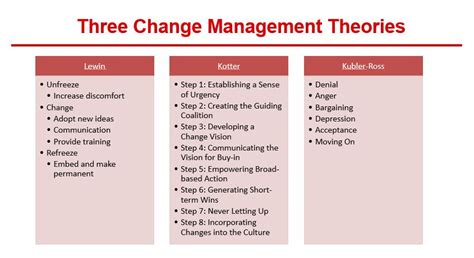
Policy change is a complex and multifaceted process that can be influenced by a variety of factors. Scholars have developed several theories to explain how and why policy change occurs. Here is a brief overview of some of the most common theories, along with their key characteristics:

1. The Incremental Theory of Policy Change
-
Key Characteristics:
- Policy change occurs gradually and in small steps.
- Decisions are made based on a process of trial and error.
- Change is often driven by specific events or crises.
2. The Punctuated Equilibrium Theory of Policy Change
-
Key Characteristics:
- Policy change occurs in long periods of stability punctuated by short periods of rapid change.
- Change is often triggered by major events or crises.
- New policies are often developed during periods of rapid change.
3. The Multiple Streams Theory of Policy Change
-
Key Characteristics:
- Policy change occurs when three streams (problem, policy, and politics) align.
- The problem stream refers to the perceived need for change.
- The policy stream refers to the proposed solutions to the problem.
- The politics stream refers to the political context in which the change is proposed.
4. The Advocacy Coalition Framework
-
Key Characteristics:
- Policy change occurs when competing coalitions of actors engage in a process of bargaining and negotiation.
- Coalitions are composed of actors who share common beliefs and values.
- Change occurs when coalitions are able to build consensus and mobilize support for their preferred policies.
5. The Institutional Analysis and Development Framework
-
Key Characteristics:
- Policy change is shaped by the institutions within which it occurs.
- Institutions include formal organizations, rules, and norms.
- Change occurs when institutions are adapted to new circumstances.
6. The Historical Institutionalism Theory
-
Key Characteristics:
- Policy change is path-dependent, meaning that it is shaped by past decisions.
- Institutions create constraints and opportunities for change.
- Change occurs when institutions are transformed or bypassed.
7. The Discourse Coalitions Theory
-
Key Characteristics:
- Policy change occurs when coalitions of actors are able to frame the problem and the solution in a way that resonates with the public.
- Discourse coalitions are composed of actors who share a common understanding of the problem and the solution.
- Change occurs when discourse coalitions are able to mobilize support for their preferred policies.
8. The Social Construction of Policy Theory
-
Key Characteristics:
- Policy change is the product of social interaction and negotiation.
- Policies are not objective truths but rather socially constructed artifacts.
- Change occurs when actors are able to successfully redefine the problem or the solution.
These are just a few of the many theories that have been developed to explain policy change. No single theory is able to fully account for the complexity of the process. However, by understanding the different perspectives offered by these theories, scholars and policymakers can gain a better understanding of how and why policy change occurs.
| Theory | Key Characteristics |
|---|---|
| Incremental Theory | Policy change occurs gradually and in small steps. |
| Punctuated Equilibrium Theory | Policy change occurs in long periods of stability punctuated by short periods of rapid change. |
| Multiple Streams Theory | Policy change occurs when three streams (problem, policy, and politics) align. |
| Advocacy Coalition Framework | Policy change occurs when competing coalitions of actors engage in a process of bargaining and negotiation. |
| Institutional Analysis and Development Framework | Policy change is shaped by the institutions within which it occurs. |
| Historical Institutionalism Theory | Policy change is path-dependent, meaning that it is shaped by past decisions. |
| Discourse Coalitions Theory | Policy change occurs when coalitions of actors are able to frame the problem and the solution in a way that resonates with the public. |
| Social Construction of Policy Theory | Policy change is the product of social interaction and negotiation. |
| Factor | Description |
|---|---|
| Political context | The political context in which a policy change is proposed can have a significant impact on its success. Factors such as the distribution of power, the level of public support, and the nature of the political system can all influence the likelihood of change. |
| Economic conditions | Economic conditions can also play a role in policy change. For example, a recession may lead to increased support for social welfare programs, while a period of economic growth may lead to increased support for tax cuts. |
| Social movements | Social movements can be a powerful force for policy change. By mobilizing public support and putting pressure on policymakers, social movements can help to bring about desired changes. |
| Technological change | Technological change can also lead to policy change. For example, the development of the internet has led to changes in privacy laws and regulations. |
| Ideas | New ideas can also lead to policy change. For example, the idea of sustainable development has led to changes in environmental policy. |
| Mistake | Description |
|---|---|
| Failing to define the problem | Before proposing a policy change, it is important to clearly define the problem that the change is intended to address. |
| Failing to build a coalition of support | Policy change is more likely to be successful if it is supported by a broad coalition of actors. |
| Failing to anticipate the consequences of change | It is important to think through the potential consequences of a policy change before implementing it. |
| Failing to monitor and evaluate change | Once a policy change has been implemented, it is important to monitor and evaluate its progress to ensure that it is achieving its intended outcomes. |
| Best Practice | Description |
|---|---|
| Define the problem clearly | Before proposing a policy change, it is important to clearly define the problem that the change is intended to address. |
| Build a coalition of support | Policy change is more likely to be successful if it is supported by a broad coalition of actors. |
| Anticipate the consequences of change | It is important to think through the potential consequences of a policy change before implementing it. |
| Monitor and evaluate change | Once a policy change has been implemented, it is important to monitor and evaluate its progress to ensure that it is achieving its intended outcomes. |
| Be flexible and adaptable | Policy change is an iterative process. It is important to be flexible and |