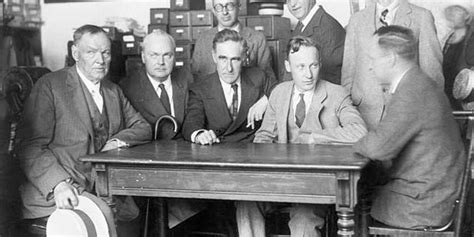
In the annals of American jurisprudence, the Scopes Trial stands as a watershed moment, forever shaping the intersection of science, religion, and law. Set against the backdrop of post-World War I America, the trial ignited a national debate that reverberates to this day.

Genesis of the Trial
The trial’s origins lie in Tennessee’s Butler Act of 1925, which prohibited the teaching of evolution in public schools. The law was a response to the growing popularity of Darwin’s theory of natural selection, which challenged the traditional Biblical account of creation.
John T. Scopes, a young high school biology teacher in Dayton, Tennessee, defied the law by teaching evolution to his students. His arrest in May 1925 sparked a legal battle that attracted national attention.
The Players
The Scopes Trial featured an all-star cast of participants:
- John Scopes: The defendant, a former University of Chicago student who had been teaching for only two years.
- Clarence Darrow: A renowned defense attorney known for his wit and brilliance.
- William Jennings Bryan: A three-time Democratic presidential nominee who served as prosecutor for the state of Tennessee.
The Trial
The trial began on July 10, 1925, and lasted for eight days. The prosecution presented a cavalcade of witnesses, including scientists who testified against evolution. The defense, led by Darrow, countered with experts who supported the theory.
One of the most dramatic moments in the trial came when Darrow called Bryan to the stand as a witness for the defense. Darrow’s relentless questioning exposed Bryan’s literalist interpretation of the Bible and his ignorance of scientific findings.
The Verdict
On July 21, 1925, the jury found Scopes guilty of violating the Butler Act. However, the judge sentenced him to the minimum fine of $100, which he later appealed.
The Tennessee Supreme Court overturned Scopes’ conviction in 1927 on a technicality. However, the Butler Act remained in effect until 1967, when it was finally struck down by the U.S. Supreme Court in Epperson v. Arkansas.
The Impact
The Scopes Trial had a profound impact on American society:
- Science and Religion: The trial ignited a national debate about the relationship between science and religion, leading to a greater acceptance of evolutionary theory in the United States.
- Freedom of Speech: The trial raised important questions about the limits of free speech, particularly in educational contexts.
- Symbolism: The trial became a symbol of the struggle between traditional values and modernism, dividing the nation along cultural and religious lines.
Lessons Learned
The Scopes Trial left behind several valuable lessons:
- Respect for Science: The trial demonstrated the importance of respecting scientific evidence and using it to inform public policy decisions.
- Freedom of Inquiry: Governments should not restrict the teaching of ideas, even if those ideas are controversial or challenge prevailing religious beliefs.
- Importance of Education: The trial underscored the need for a well-educated citizenry that can critically evaluate information and make informed decisions.
Tips and Tricks
- Visit the Historic Sites: The Dayton Courthouse, where the trial was held, and other related sites offer a glimpse into this pivotal event.
- Read Primary Sources: Explore transcripts, letters, and articles from the trial to gain a firsthand understanding of the arguments and the atmosphere.
- Consider the Broader Context: Analyze the Scopes Trial in relation to other social, political, and cultural developments of the early 20th century.
Common Mistakes to Avoid
- Oversimplifying the Issues: The Scopes Trial was a complex event with multiple layers of meaning. Avoid reducing it to a simple conflict between science and religion.
- Ignoring the Historical Context: The trial cannot be fully understood without considering the social and cultural attitudes of the time.
- Conflating the Butler Act with Anti-Evolution Laws: The Butler Act was just one example of a series of laws passed in the early 20th century that targeted the teaching of evolution.
FAQs
- What was the main argument against teaching evolution?
Conservatives argued that evolution conflicted with the literal interpretation of the Bible and undermined traditional values.
- Why did Clarence Darrow call Bryan to the stand?
Darrow hoped to discredit Bryan’s credibility as a witness for the prosecution by exposing his ignorance of scientific findings.
- What was the impact of the Scopes Trial on religious freedom?
Although the trial did not directly protect the right to teach evolution, it helped to create an environment where free inquiry was more likely to be tolerated.
- Does the Scopes Trial still have relevance today?
The Scopes Trial continues to be studied and debated today, reflecting its enduring impact on issues such as the relationship between science and religion, freedom of speech, and the role of education in a democratic society.
Additional Information
- Table 1: Key Dates in the Scopes Trial
| Date | Event |
|---|---|
| May 1925 | Scopes is arrested for teaching evolution |
| July 10, 1925 | Trial begins |
| July 21, 1925 | Scopes found guilty |
| 1927 | Tennessee Supreme Court overturns Scopes’ conviction |
| 1967 | U.S. Supreme Court strikes down the Butler Act |
- Table 2: Witnesses at the Scopes Trial
| Witness | Side | Occupation |
|---|---|---|
| John T. Scopes | Defense | Biology teacher |
| Clarence Darrow | Defense | Attorney |
| William Jennings Bryan | Prosecution | Former presidential nominee |
| George Washington Carver | Prosecution | Agricultural scientist |
| Maynard Shipman | Defense | Evolutionist |
- Table 3: Legal Significance of the Scopes Trial
| Case | Decision | Impact |
|---|---|---|
| Scopes v. State of Tennessee | Guilty verdict overturned | Butler Act remains in effect |
| Epperson v. Arkansas | Butler Act struck down | Teaching of evolution protected by the First Amendment |
- Table 4: Cultural Impact of the Scopes Trial
| Effect | Description |
|---|---|
| Increased acceptance of evolution | Darwin’s theory becomes more widely accepted in the U.S. |
| Division of American society | Trial creates a cultural divide between traditionalists and modernists |
| Symbol of the struggle between science and religion | Trial highlights the tensions between scientific and religious worldviews |