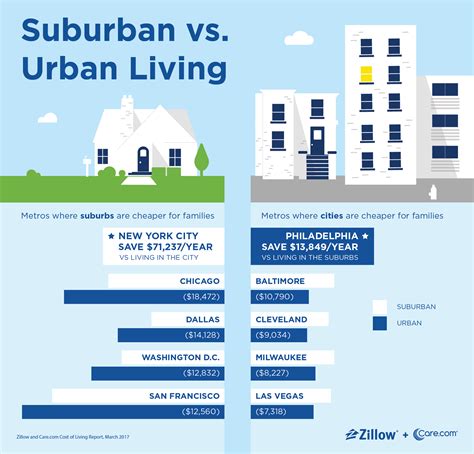
For generations, Americans have grappled with the choice between suburban and urban living. Both offer unique advantages and challenges, and the decision of which is right for you depends on your individual preferences and circumstances.

Suburban Life: Space, Tranquility, and Community
Suburban living is characterized by its spacious homes, verdant lawns, and quiet streets. It offers a sense of community and safety, and it’s an ideal environment for families with children.
Pros:
- Spacious living: Suburban homes typically offer more square footage than their urban counterparts, providing ample space for families and entertaining.
- Outdoor space: Most suburban homes have private yards, which can be used for gardening, playing, or simply relaxing.
- Community: Suburbs often have a strong sense of community, with neighbors organizing block parties, social events, and community groups.
- Safety: Suburbs tend to be safer than urban areas, with lower crime rates and a greater police presence.
Cons:
- Commuting: Suburban residents often commute long distances to work, which can be time-consuming and stressful.
- Higher cost of living: Suburbs generally have higher housing costs, property taxes, and other expenses compared to urban areas.
- Lack of amenities: Suburbs may have fewer shops, restaurants, and entertainment options within walking distance.
- Limited public transportation: Public transportation is often limited in suburban areas, making it difficult to get around without a car.
Urban Life: Convenience, Culture, and Connectivity
Urban living offers unparalleled convenience, cultural amenities, and connectivity. It’s a great choice for young professionals, singles, and those who enjoy a vibrant and fast-paced lifestyle.
Pros:
- Convenience: Urban living puts you close to work, shops, restaurants, entertainment, and public transportation.
- Cultural amenities: Cities are hubs of culture, with museums, theaters, art galleries, and live music venues.
- Connectivity: Urban areas have excellent public transportation systems, making it easy to get around without a car.
- Lower cost of living: In some cases, urban apartments can be more affordable than suburban homes.
Cons:
- Small living spaces: Urban apartments are typically smaller than suburban homes, which can be a challenge for families or those who value privacy.
- Noise and pollution: Urban areas can be noisy and polluted, which can impact quality of life.
- Lack of outdoor space: Most urban apartments do not have private yards or balconies.
- Crowds and congestion: Cities can be crowded and congested, which can be overwhelming for some people.
Making the Right Choice
The choice between suburban and urban living is a personal one. There is no right or wrong answer, and the best decision depends on your individual needs and preferences.
Consider the following factors:
- Your lifestyle: Do you prefer a quiet and family-oriented lifestyle or a vibrant and social one?
- Your budget: Can you afford the higher cost of living in a suburb or the smaller living space in a city?
- Your work situation: Where do you work, and how important is commuting time to you?
- Your family situation: Do you have children or plan to have them in the future?
- Your personality: Are you drawn to the tranquility of a suburb or the hustle and bustle of a city?
A New Perspective: “Suburburban” Living
In recent years, a new hybrid living option has emerged: “suburburban” living. This concept combines the best of both suburban and urban lifestyles, offering the space and tranquility of a suburb with the convenience and amenities of a city.
Suburburban neighborhoods are typically located on the outskirts of cities, providing residents with access to urban amenities while still enjoying the benefits of a suburban lifestyle. They often feature spacious homes with private yards, as well as community amenities such as parks, trails, and recreation centers.
Benefits of Suburburban Living:
- Access to urban amenities: Suburburban residents can enjoy the convenience and cultural amenities of a city without having to live in the heart of it.
- Spacious living: Suburburban homes typically offer more square footage than urban apartments, providing ample space for families and entertaining.
- Outdoor space: Most suburburban homes have private yards, which can be used for gardening, playing, or simply relaxing.
- Community: Suburburban neighborhoods often have a strong sense of community, with neighbors organizing block parties, social events, and community groups.
Comparative Tables
| Feature | Suburbs | Urban | Suburburban |
|---|---|---|---|
| Housing costs | Higher | Lower | Varies |
| Property taxes | Higher | Lower | Varies |
| Commuting time | Long | Short | Varies |
| Public transportation | Limited | Excellent | Good |
| Access to amenities | Limited | Excellent | Good |
| Safety | Safer | Less safe | Varies |
| Sense of community | Strong | Weaker | Varies |
| Outdoor space | Ample | Limited | Varies |
| Noise and pollution | Less | More | Varies |
| Crowds and congestion | Less | More | Varies |
| Factor | Suburban | Urban | Suburburban |
|---|---|---|---|
| Lifestyle | Quiet and family-oriented | Vibrant and social | Hybrid |
| Budget | Higher | Lower | Varies |
| Work situation | Commuting time important | Commuting time not as important | Varies |
| Family situation | Ideal for families with children | May not be ideal for families with children | Varies |
| Personality | Tranquil and private | Social and adventurous | Open to both |
Conclusion
The choice between suburban, urban, and suburburban living is a multifaceted one. There is no one-size-fits-all solution, and the best decision depends on your individual circumstances and preferences. By carefully considering the factors discussed in this article, you can make an informed choice that will enhance your quality of life.