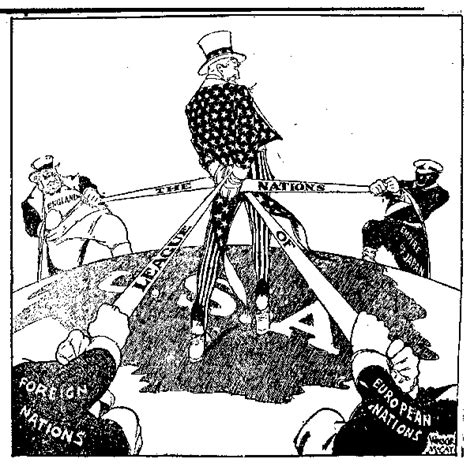
Introduction:

The League of Nations was an international organization founded in 1920 as part of the Treaty of Versailles that ended World War I. Its primary goal was to prevent future wars through collective security, disarmament, and the peaceful settlement of disputes. However, a group known as isolationists objected to the United States joining the League and their reasons were multifaceted and had a significant impact on American foreign policy.
Fear of Entanglement in Foreign Conflicts:
Isolationists believed that joining the League would entangle the United States in foreign conflicts and potentially lead to war. They argued that America should remain isolated from European affairs and focus on its own domestic concerns. This view was widely held among the American public, who were weary of the costs and sacrifices of World War I.
Loss of Sovereignty:
Isolationists also objected to the League’s potential impact on American sovereignty. They feared that membership would require the United States to surrender some of its decision-making authority to an international body. This concern was particularly strong among Republicans, who traditionally championed American independence.
Absence of Republican Support:
The Republican Party was opposed to the League of Nations from the outset. President Woodrow Wilson, a Democrat, negotiated the Treaty of Versailles, but he failed to secure the support of Republican senators, who held a majority in the Senate. Their opposition prevented the United States from ratifying the treaty and joining the League.
Influence of Public Opinion:
Public opinion played a major role in shaping the isolationist sentiment in the United States. The American people were disillusioned with the League after the failure of its efforts to prevent World War II. They believed that the League was ineffective and that it had not lived up to its promises of preventing future wars.
Effects of Isolationism:
The objections of isolationists had a profound impact on American foreign policy. The United States did not join the League of Nations and pursued a policy of isolationism until the outbreak of World War II. This isolationism prevented the United States from playing a more active role in international affairs and weakened the League’s ability to maintain peace.
Conclusion:
The objections of isolationists to the League of Nations were rooted in fears of foreign entanglement, loss of sovereignty, and the absence of Republican support. These objections were widely held among the American public and had a significant impact on American foreign policy. The United States remained isolated from international affairs until the outbreak of World War II, and its isolationism weakened the League of Nations and contributed to the failure of its efforts to prevent future wars.