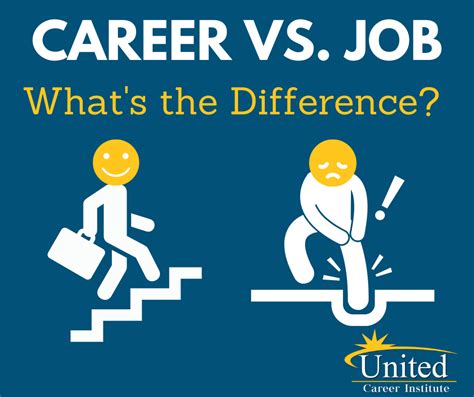
In the modern workforce, it has become imperative to distinguish between a career and a job. While these terms are often used interchangeably, they represent distinct concepts that can significantly impact your professional trajectory. Embark on this in-depth exploration of the fundamental differences between a career and a job, empowering you with the knowledge to navigate your professional journey with purpose and clarity.

Defining the Boundaries: Career vs. Job
Job:
- Definition: A position within an organization involving specific tasks and responsibilities to be performed within a defined period.
- Focus: Short-term employment, typically with a narrow scope of responsibilities.
- Goal: Exchange of labor for immediate compensation.
Career:
- Definition: A long-term, progressive journey involving the development of skills, experience, and knowledge within a particular field or industry.
- Focus: Long-term professional growth and advancement.
- Goal: Personal fulfillment, financial stability, and career legacy.
Key Distinctions
| Feature | Job | Career |
|---|---|---|
| Duration | Short-term | Long-term |
| Scope | Narrow | Broad |
| Focus | Task-oriented | Growth-oriented |
| Goal | Compensation | Fulfillment |
| Commitment | Temporary | Significant |
| Advancement | Limited | Potential for progression |
| Training | On-the-job training | Formal education, professional development |
| Compensation | Hourly or fixed salary | Performance-based or seniority-based |
Career Exploration: Uncovering Your True Calling
Navigating your career path requires self-reflection and thorough research. Identify your interests, skills, and values to pinpoint potential career paths that align with your aspirations. Explore various industries, job titles, and company cultures to discover the opportunities that resonate with you.
Common Pitfalls to Avoid
- Chasing a Job for the Wrong Reasons: Avoid being lured in by high salaries or impressive job titles without considering whether the role aligns with your long-term goals.
- Stagnation in a Job: Prevent yourself from getting stuck in a monotonous job that offers no opportunities for growth. Proactively seek opportunities to expand your responsibilities and develop new skills.
- Lack of a Clear Career Plan: Define your career aspirations and develop a strategy to achieve them. Avoid drifting through your professional life without a clear direction.
Career Advancement: Strategies for Success
- Invest in Education and Development: Pursue higher education, attend workshops, or obtain certifications to enhance your skills and knowledge base.
- Seek Mentorship and Guidance: Identify mentors who can provide support, advice, and industry insights.
- Network and Build Relationships: Attend industry events, connect with professionals on LinkedIn, and build a robust network to expand your career opportunities.
- Take Calculated Risks: Step outside your comfort zone and embrace challenges that can accelerate your professional growth.
- Embrace Continuous Learning: Stay updated with industry trends and technological advancements through ongoing learning and development.
Honoring the Journey: The Importance of a Fulfilling Career
Beyond financial rewards, a fulfilling career provides a sense of purpose, accomplishment, and personal growth. It aligns with your values and allows you to make a meaningful contribution to your field or community. Prioritize your career aspirations and strive to build a professional path that brings you joy and satisfaction.
Conclusion
Understanding the fundamental differences between a career and a job empowers you to make informed decisions about your professional trajectory. Embrace the opportunities that a career offers, continuously invest in your development, and pursue a path that aligns with your aspirations. By navigating your career with purpose and clarity, you can create a fulfilling and successful journey that extends far beyond a mere job.