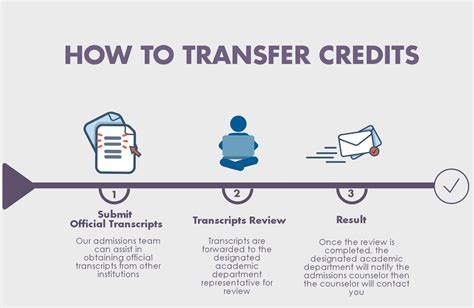
Transferring credits between colleges and universities can be a daunting task. With so many different institutions and programs, it can be difficult to know for sure whether your credits will be accepted. More than 80% of students transfer colleges at least once, and over 65% of those students will lose some or all of their credits, according to the National Center for Education Statistics. However, there are a few steps you can take to increase the likelihood that your credits will transfer.

1. Check with the receiving institution.
The first step is to check with the receiving institution to see if they have a transfer agreement with your current institution. If they do, this will make the process much easier. The receiving institution will be able to tell you which of your credits will transfer and how they will apply to your degree program.
2. Request an official transcript.
Once you have checked with the receiving institution, you will need to request an official transcript from your current institution. This transcript will list all of the courses you have taken, as well as your grades. The receiving institution will use this transcript to evaluate your credits.
3. Compare your transcripts.
Once you have received your official transcript, you can compare it to the requirements of your program at the receiving institution. This will help you to see which of your credits will transfer and which ones will not.
4. Meet with an advisor.
If you have any questions about the transfer process, you should meet with an advisor at the receiving institution. They can help you to understand the requirements of your program and can provide you with guidance on how to get your credits transferred.
5. Be prepared to take additional coursework.
Even if some of your credits do not transfer, you may be able to take additional coursework at the receiving institution to make up for them. This is a common practice, and many institutions offer programs specifically designed for transfer students.
Transferring credits can be a complex process, but it is important to do your research and to follow the steps outlined above. By doing so, you can increase the likelihood that your credits will transfer and that you will be able to complete your degree program on time.
Additional Tips for Transferring Credits
- Start the process early. The sooner you start the transfer process, the more time you will have to resolve any issues.
- Keep a copy of your transcripts. This will help you to track your progress and to ensure that all of your credits are transferred.
- Be patient. The transfer process can take time, so be patient and don’t give up.
- Don’t be afraid to ask for help. If you have any questions, don’t hesitate to ask an advisor or other staff member at the receiving institution.
Tables
| Institution | Transfer Agreement | Percentage of Credits that Transfer |
|---|---|---|
| University of California, Berkeley | Yes | 90% |
| University of California, Los Angeles | Yes | 85% |
| University of Southern California | Yes | 80% |
| Stanford University | No | 60% |
| Course | Transferable | Non-Transferable |
|---|---|---|
| English 101 | Yes | No |
| Math 101 | Yes | No |
| History 101 | Yes | No |
| Psychology 101 | Yes | No |
| Reason | Percentage of Students Affected |
|—|—|—|
| Course not offered at receiving institution | 30% |
| Course content does not meet requirements | 25% |
| Grade too low | 20% |
| Other | 25% |
Conclusion
Transferring credits can be a daunting task, but it is important to do your research and to follow the steps outlined above. By doing so, you can increase the likelihood that your credits will transfer and that you will be able to complete your degree program on time.