Introduction
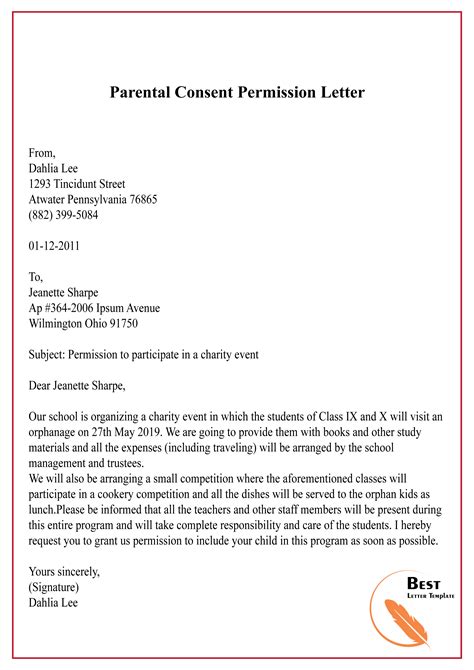
A permission letter from parents is an essential document that serves as legal authorization from a child’s parents or guardians for various activities and events. Whether it’s for a school trip, a sports competition, or a medical procedure, obtaining parental consent is crucial to ensure the child’s safety and well-being. This comprehensive guide will delve into the significance of permission letters, provide step-by-step instructions on how to write one, and offer valuable tips to enhance the effectiveness of these documents.
Importance of Permission Letters
Permission letters are not merely formalities but hold significant legal and ethical implications. They:
- Establish Legal Guardianship: They legally establish the parent’s or guardian’s authority to make decisions on behalf of the child.
- Protect Children: They ensure that the child is under responsible adult supervision during authorized activities.
- Safeguard Privacy: They protect the child’s privacy by limiting access to personal information to authorized individuals.
- Enhance Communication: They foster communication between parents, guardians, and relevant authorities, ensuring everyone is aware of the child’s activities.
Who Can Write a Permission Letter?
In general, the following individuals can write a permission letter for a child:
- Parents: Biological or legal parents of the child.
- Guardians: Legally appointed guardians responsible for the child’s well-being.
- Caregivers: Persons authorized by the parents or guardians to provide temporary care for the child.
Step-by-Step Guide to Writing a Permission Letter
To write an effective permission letter, follow these simple steps:
1. Header:
- Clearly state the date and recipient’s information (e.g., school principal, medical facility).
2. Introduction:
- Begin with a polite salutation (e.g., “Dear Mr./Ms. Last Name”).
- State the purpose of the letter (e.g., “I am writing to request permission for my child’s participation in the upcoming field trip”).
- Provide the child’s full name, date of birth, and any relevant details.
3. Body:
- Describe the activity or event for which permission is being sought.
- Include the specific dates, times, and locations involved.
- Clearly outline any potential risks or hazards associated with the activity.
4. Emergency Contact Information:
- Provide contact information for the parent or guardian who will be available in case of an emergency.
- Include multiple contact numbers and email addresses for easy accessibility.
5. Signature and Date:
- The letter must be signed and dated by the parent or guardian.
- The signature serves as legal consent to the terms specified in the letter.
Tips for Enhancing Permission Letters
- Be Specific: Provide as much detail as possible about the activity or event, including the duration, location, and any special requirements.
- Use Clear Language: Write in a clear and concise manner that is easily understandable by the recipient.
- Keep it Brief: Limit the letter to one page and avoid unnecessary jargon.
- Proofread Carefully: Review the letter thoroughly for any errors or omissions before submitting it.
- Obtain Multiple Copies: Make multiple copies of the letter for your records and the other parties involved.
Conclusion
Permission letters from parents are essential documents that ensure the safety and well-being of children. By following the steps outlined in this guide and incorporating the tips provided, you can create effective permission letters that meet legal and ethical requirements and foster transparent communication between parents and guardians, educational institutions, and healthcare providers.