Definition

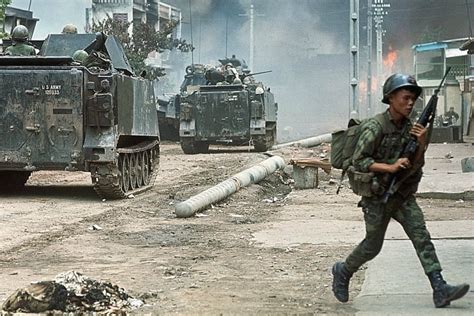
The Tet Offensive, launched by North Vietnamese and Viet Cong forces in 1968, was a surprise attack on major cities and towns in South Vietnam during the Tet holiday. The offensive marked a turning point in the Vietnam War, with significant political and military implications.
Prelude
In the years leading up to the Tet Offensive, the Vietnam War had escalated into a protracted conflict. The United States had deployed hundreds of thousands of troops to South Vietnam, while North Vietnam received extensive support from China and the Soviet Union. Despite heavy fighting, the war had reached a stalemate, with neither side able to gain a decisive advantage.
Planning and Objectives
The Tet Offensive was meticulously planned by North Vietnamese General Vo Nguyen Giap. Its objectives were to provoke a general uprising in South Vietnam, cut off American supply lines, and force the United States to withdraw its troops.
The Offensive
The Tet Offensive commenced on January 30, 1968, with attacks on over 100 locations in South Vietnam. Viet Cong and North Vietnamese forces struck Saigon, Huế, and other major cities, catching American and South Vietnamese forces by surprise. The offensive initially achieved some tactical successes, including the capture of the U.S. Embassy in Saigon.
American and South Vietnamese Response
The initial surprise of the Tet Offensive gave way to a determined response from American and South Vietnamese forces. U.S. troops and South Vietnamese Rangers fought fiercely to retake lost positions. The United States also launched heavy airstrikes against North Vietnamese targets.
Aftermath
The Tet Offensive ultimately failed to achieve its strategic objectives. American and South Vietnamese forces regained control of all major cities, and the general uprising that North Vietnam had hoped for failed to materialize. However, the Tet Offensive had a profound impact on the war and American public opinion.
Political and Military Impact
The Tet Offensive shattered the illusion that the United States was winning the war. The scale and audacity of the attack demonstrated the resilience of the North Vietnamese and Viet Cong. It also exposed the weakness of the South Vietnamese government and military, which had been heavily reliant on American support.
The Tet Offensive led to a change in U.S. strategy in Vietnam. President Lyndon Johnson ordered a reduction in bombing raids on North Vietnam and called for peace talks. The offensive also contributed to the growing anti-war movement in the United States, which pressured the government to withdraw from the conflict.
Casualties
The Tet Offensive resulted in heavy casualties on all sides. According to official estimates, over 8,000 American soldiers and 30,000 South Vietnamese soldiers were killed or wounded. North Vietnamese and Viet Cong losses were even higher, with estimates ranging from 50,000 to 100,000.
Legacy
The Tet Offensive remains a significant event in the history of the Vietnam War. It was a turning point that challenged American assumptions about the war’s progress and contributed to the growing disillusionment with the conflict. The offensive’s legacy continues to shape discussions about the nature of war and the limits of American military power.
Additional Information
Key Figures
- Number of American soldiers killed or wounded: 8,000+
- Number of South Vietnamese soldiers killed or wounded: 30,000+
- Estimated North Vietnamese and Viet Cong losses: 50,000-100,000
Chronology
- January 30, 1968: Tet Offensive begins
- January 31, 1968: Viet Cong attack U.S. Embassy in Saigon
- March 1968: American and South Vietnamese forces retake all major cities
- November 1968: Peace talks between the United States and North Vietnam begin
Key Tables
- Table 1: Tet Offensive Casualties
| Group | Killed or Wounded |
|---|---|
| American | 8,000+ |
| South Vietnamese | 30,000+ |
| North Vietnamese/Viet Cong | 50,000-100,000 |
- Table 2: Tet Offensive Targets
| City/Location | Target |
|---|---|
| Saigon | U.S. Embassy, Presidential Palace |
| Huế | Imperial Citadel, provincial headquarters |
| Da Nang | Air base, port |
| Qui Nhon | Air base |
| Nha Trang | Air base, port |
- Table 3: Tet Offensive Aftermath
| Event | Date |
|---|---|
| American bombing raids on North Vietnam reduced | March 1968 |
| Peace talks between the United States and North Vietnam begin | November 1968 |
| Growing anti-war movement in the United States | 1968-1975 |
- Table 4: Tet Offensive Key Figures
| Figure | Role |
|---|---|
| Lyndon Johnson | U.S. President |
| Vo Nguyen Giap | North Vietnamese General |
| William Westmoreland | U.S. Army General |
| Nguyen Van Thieu | President of South Vietnam |