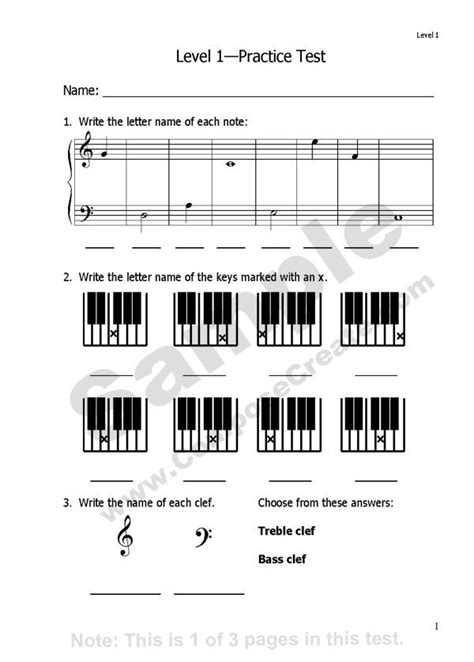
Prepare to Challenge Your Understanding of Music Fundamentals
Are you eager to assess your music theory prowess? Embark on our comprehensive test designed to scrutinize your grasp of essential music theory concepts. With questions covering both basic and advanced elements, this test will push your knowledge to its limits.

Test Your Mettle
This test encompasses a wide range of topics, including:
- Intervals: Determine the intervals between notes and identify their quality (major, minor, etc.).
- Scales: Recognize and construct various scales, including major, minor, and pentatonic scales.
- Chords: Identify and analyze different types of chords, such as major, minor, and seventh chords.
- Harmony: Understand how chords interact and create harmonic progressions.
- Rhythm: Analyze rhythms and identify different time signatures.
- Form and Structure: Recognize and identify different musical forms, such as sonata form and theme and variations.
- Orchestration: Understand the principles of arranging music for different instruments.
- History and Analysis: Examine musical styles throughout history and analyze pieces from various genres.
Why Music Theory Matters
Mastering music theory is not merely an academic pursuit; it empowers musicians to:
- Expand Their Creative Horizons: Understand the building blocks of music allows for more inventive compositions.
- Improvise Confidently: Grasping music theory enables musicians to navigate unfamiliar musical landscapes and improvise with ease.
- Communicate Effectively: A shared understanding of music theory facilitates collaboration and communication among musicians.
- Appreciate Music More Fully: Theory provides a deeper understanding of musical structures, enhancing the enjoyment of listening experiences.
How to Ace the Test
To prepare for this challenging test, consider the following tips:
- Study Consistently: Regular review of music theory concepts is crucial for retention.
- Practice Ear Training: Develop your ability to recognize intervals, chords, and rhythms by ear.
- Analyze Music: Listen to different pieces and identify the musical elements at play.
- Seek Professional Guidance: Consider seeking guidance from a music theory instructor to clarify complex concepts.
Common Mistakes to Avoid
Aspiring music theorists should be mindful of these common pitfalls:
- Overreliance on Notation: While notation is essential, it’s crucial to develop an understanding of musical concepts beyond written symbols.
- Neglecting Ear Training: Ear training is fundamental for developing musical intuition and recognizing patterns.
- Memorization Without Understanding: Avoid relying solely on rote memorization; strive to comprehend the underlying principles behind music theory.
- Fear of Complexity: Don’t shy away from advanced concepts; they will expand your musical knowledge.
Benefits of Music Theory Proficiency
Education:
- Enroll in music theory programs at universities and conservatories.
- Become a music theory instructor.
- Publish research papers on music theory.
Performance:
- Join ensembles and orchestras as a musician.
- Compose and arrange music for various purposes.
- Engage in musical improvisation and performance.
Music Industry:
- Work as a music producer or engineer.
- Manage recording studios.
- Engage in music publishing and distribution.
Other Applications:
- Use music theory principles in sound design for film and video games.
- Develop educational materials for music students.
- Create music therapy programs.
Skill Enhancement Table
| Skill | How Music Theory Enhances It |
|---|---|
| Pitch Recognition | Improves accuracy in recognizing and matching pitches |
| Interval Identification | Develops a keen ear for identifying intervallic relationships |
| Chord Analysis | Enables musicians to understand and create complex harmonic structures |
| Rhythm Comprehension | Fosters an understanding of rhythmic patterns and time signatures |
| Form and Structure Recognition | Provides a framework for comprehending musical compositions |
Analytical Skills Table
| Analytical Skill | How Music Theory Develops It |
|---|---|
| Pattern Recognition | Helps identify recurring patterns within musical compositions |
| Problem Solving | Encourages musicians to approach musical challenges creatively |
| Logical Reasoning | Teaches logical thinking in the context of music theory |
| Critical Thinking | Develops a critical eye for evaluating and interpreting musical ideas |
| Communication | Enhances communication skills through the use of musical terminology |
Historical Context Table
| Historical Period | How Music Theory Influenced Music |
|---|---|
| Baroque Era | Established the foundation of Western music theory, including scales, chords, and counterpoint |
| Classical Era | Refined harmonic and melodic principles, leading to the development of sonata form |
| Romantic Era | Expanded the expressive and emotional possibilities of music theory |
| 20th Century | Introduced new concepts such as atonality, serialism, and minimalism |
Educational Resources Table
| Educational Resource | Description |
|---|---|
| Music Theory Textbooks | Comprehensive books covering all aspects of music theory |
| Online Courses | Interactive platforms offering self-paced music theory instruction |
| Music Theory Apps | Mobile applications providing interactive exercises and quizzes |
| Music Theory Workshops | In-person or virtual sessions led by experienced music theorists |
| Private Music Theory Lessons | Personalized instruction tailored to individual learning styles |