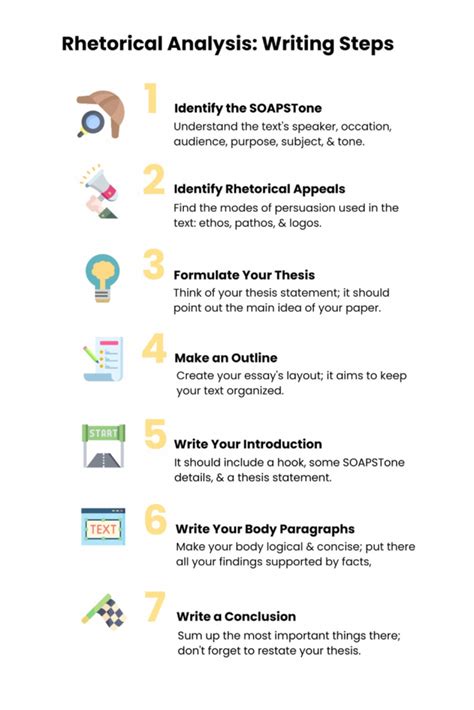
Mastering rhetorical analysis is crucial for students aiming to excel in the Advanced Placement (AP) English Language and Composition exam. This article provides an extensive collection of prompts to guide your practice and hone your analytical abilities.

Why Rhetorical Analysis Matters
According to the College Board, the AP Lang exam assesses students’ “ability to analyze and evaluate the effectiveness of written discourse.” Rhetorical analysis is a key component of this evaluation as it helps you:
- Uncover the author’s purpose and intended audience
- Identify and understand rhetorical devices and strategies
- Determine the impact of language, structure, and tone
- Evaluate the effectiveness of the argument
How Rhetorical Analysis Benefits You
Beyond the exam, rhetorical analysis offers several benefits:
- Improves critical thinking and close reading skills
- Enhances communication and persuasion skills
- Fosters an understanding of different perspectives
- Increases awareness of media manipulation and spin
Comprehensive AP Lang Rhetorical Analysis Prompts
Speech Analysis
- Analyze Abraham Lincoln’s Gettysburg Address, paying close attention to its rhetorical strategies and impact on the audience.
- Examine Martin Luther King Jr.’s “I Have a Dream” speech, focusing on the use of metaphors, imagery, and repetition.
- Analyze a contemporary political speech, considering its appeals to ethos, pathos, and logos.
Essay Analysis
- Analyze an essay by Toni Morrison, exploring her use of language, imagery, and structure to convey complex themes.
- Examine a scientific report on climate change, evaluating the author’s use of evidence, logical reasoning, and appeals to authority.
- Analyze a persuasive essay on social justice, identifying the author’s claims, counterarguments, and rhetorical appeals.
Argument Analysis
- Analyze an argumentative newspaper article on a controversial topic, evaluating the author’s use of evidence, reasoning, and fallacies.
- Examine a debate transcript, identifying the main arguments, strategies, and fallacies used by both speakers.
- Analyze a court brief, considering the author’s use of legal precedent, syllogisms, and appeals to emotion.
Multimodal Analysis
- Analyze a political cartoon, examining the use of satire, symbolism, and exaggeration to convey a message.
- Examine an advertisement, identifying the rhetorical devices and appeals used to persuade the audience.
- Analyze a social media campaign, considering the use of language, imagery, and interactive elements to engage the audience.
Table 1: Types of Rhetorical Devices
| Device | Definition | Example |
|---|---|---|
| Metaphor | Implying a comparison without using “like” or “as” | “The world is a stage.” |
| Simile | Explicitly comparing two things using “like” or “as” | “The grass is as green as an emerald.” |
| Personification | Giving human qualities to nonhuman things | “The wind whispered through the trees.” |
| Hyperbole | Exaggerating for effect | “I’m so hungry, I could eat a horse.” |
| Understatement | Minimizing or downplaying something | “It’s not exactly pristine.” |
Table 2: Rhetorical Strategies
| Strategy | Description |
|---|---|
| Pathos | Appealing to emotions |
| Ethos | Establishing credibility |
| Logos | Using logical arguments |
| Kairos | Addressing the right audience at the right time |
| Anaphora | Repeating words or phrases at the beginning of successive lines |
Table 3: Effective Rhetorical Analysis Strategies
| Strategy | Description |
|---|---|
| Close Reading | Examining the text carefully, deciphering meaning from words, structure, and context |
| Identify Purpose and Audience | Determining the author’s intended message and the target audience |
| Analyze Rhetorical Devices | Recognizing and interpreting figures of speech, metaphors, and other persuasive techniques |
| Evaluate Arguments | Assessing the validity of the author’s claims and the effectiveness of their reasoning |
| Cite Evidence | Supporting claims with specific examples from the text |
| Write Clearly and Concisely | Communicating analysis in a well-organized and accessible manner |
Table 4: Benefits of Rhetorical Analysis
| Benefit | Description |
|---|---|
| Enhanced Critical Thinking | Developing the ability to analyze and evaluate written discourse |
| Improved Communication Skills | Strengthening persuasive and explanatory writing abilities |
| Deepened Understanding | Gaining insights into diverse perspectives and arguments |
| Media Literacy | Recognizing and countering spin and manipulation in media messages |
| Academic Success | Excelling in AP Lang and other English courses |
FAQs
Q: What is a rhetorical situation?
A: A set of circumstances that a communicator adapts to when creating a message.
Q: What is the difference between denotation and connotation?
A: Denotation is the literal meaning of a word, while connotation is its implied or associated meaning.
Q: What is tone?
A: The author’s attitude towards the subject matter, reflected through language and style.
Q: How can I improve my rhetorical analysis skills?
A: Practice close reading, identify rhetorical devices, analyze arguments, write essays, and engage in discussions.
Q: What are some common fallacies to look for?
A: Ad hominem (attacking the person), straw man (creating a weak argument to easily attack), and post hoc ergo propter hoc (assuming correlation equates to causation).
Q: What is the AP Lang rhetorical analysis grading rubric?
A: The rubric assesses the student’s ability to analyze rhetoric, support claims with evidence, write clearly, and meet specific criteria related to the prompt.
Q: What are some additional tips for the AP Lang rhetorical analysis exam?
A: Manage your time, write a clear thesis statement, focus on evidence, and proofread your work carefully.
Q: Why is studying rhetoric important in the 21st century?
A: Rhetoric empowers individuals to critically evaluate information, communicate effectively, and navigate complex societal issues.