Introduction

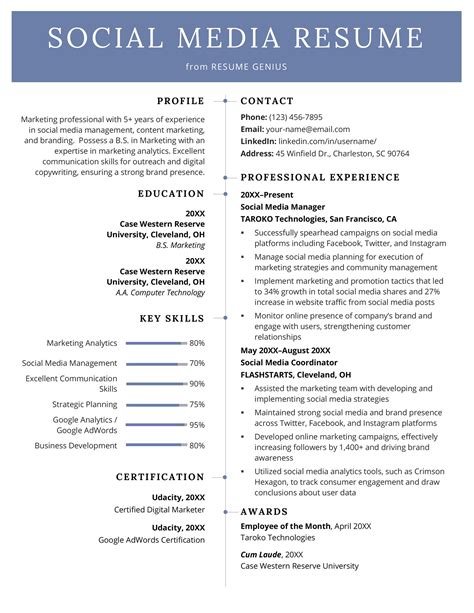
In today’s highly interconnected world, social media has become an essential tool for businesses of all sizes. As a result, job seekers with strong social media skills are in high demand. If you’re looking to highlight your social media expertise on your resume, here are a few tips to help you:
Quantify Your Accomplishments
When describing your social media accomplishments, be sure to quantify your results whenever possible. This makes your achievements more tangible and impressive to potential employers. For example, instead of saying “Increased social media engagement,” you could say “Increased social media engagement by 20%.”
Use Action Verbs
When describing your social media skills, use strong action verbs to make your resume more impactful. Some examples of action verbs include:
- Managed
- Created
- Developed
- Executed
- Measured
Highlight Industry-Specific Experience
If you have any experience using social media for a specific industry, be sure to highlight this on your resume. This shows potential employers that you have the skills and knowledge necessary to succeed in their field. For example, if you have experience using social media to promote a healthcare brand, you could say “Developed and executed social media campaigns for a healthcare brand, resulting in a 15% increase in website traffic.”
Include Keywords
When writing your resume, be sure to include keywords that potential employers are likely to search for. Some examples of social media keywords include:
- Social media marketing
- Social media management
- Community management
- Social media analytics
- Social media advertising
By using keywords, you make it more likely that your resume will be found by potential employers who are looking for candidates with your skills.
Table 1. Social Media Skills and Responsibilities**
| Social Media Skills | Responsibilities |
|---|---|
| Social media marketing | Developing and executing social media marketing campaigns |
| Social media management | Managing social media accounts, creating content, and engaging with followers |
| Community management | Building and managing online communities |
| Social media analytics | Tracking and analyzing social media data |
| Social media advertising | Buying and managing social media ads |
Table 2. Social Media Platforms**
| Social Media Platform | Description |
|---|---|
| A social networking site with over 2 billion active users | |
| A microblogging site with over 330 million active users | |
| A photo and video sharing app with over 1 billion active users | |
| A professional networking site with over 830 million active users | |
| A visual discovery engine with over 442 million active users |
Table 3. Social Media Metrics**
| Social Media Metric | Description |
|---|---|
| Reach | The number of people who see your content |
| Engagement | The number of people who interact with your content |
| Click-through rate (CTR) | The percentage of people who click on your links |
| Conversion rate | The percentage of people who take a desired action, such as making a purchase |
| Return on investment (ROI) | The amount of money you get back for your investment in social media |
Table 4. Social Media Tools**
| Social Media Tool | Description |
|---|---|
| Hootsuite | A social media management platform |
| Buffer | A social media scheduling tool |
| SproutSocial | A social media analytics and management platform |
| BuzzSumo | A tool for finding and sharing popular content |
| Google Analytics | A tool for tracking website traffic and social media performance |
Conclusion
By following these tips, you can effectively highlight your social media skills on your resume and make yourself more appealing to potential employers.
Additional Tips
- Use a professional headshot. A professional headshot makes you look more credible and trustworthy.
- Proofread your resume carefully. Make sure your resume is free of errors.
- Tailor your resume to each job you apply for. Highlight the skills and experience that are most relevant to the job you’re applying for.
- Network with people in your field. Networking can help you find jobs and learn about new opportunities.
- Stay up-to-date on the latest social media trends. By staying up-to-date on the latest trends, you can show potential employers that you’re passionate about social media and that you have the skills necessary to succeed in the field.