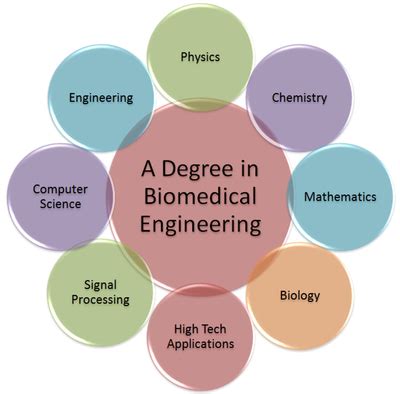
Biomedical engineers apply engineering principles to medical and biological problems, designing and developing innovative technologies that improve healthcare and human well-being. Their coursework covers a broad range of subjects, from foundational engineering concepts to specialized knowledge in medical sciences.

Core Engineering Courses
1. Mathematics
* Calculus: Limits, derivatives, integrals, differential equations
* Linear Algebra: Matrices, vectors, eigenvalues
* Probability and Statistics: Probability distributions, statistical inference
2. Physics
* Classical Mechanics: Newton’s laws, energy, momentum
* Electromagnetism: Electric fields, magnetic fields, circuits
* Thermodynamics: Heat transfer, entropy, energy conversion
3. Chemistry
* General Chemistry: Atomic structure, chemical bonding, reactions
* Organic Chemistry: Structure, properties, and reactions of organic molecules
* Biochemistry: Structure and function of biological molecules
Biomedical Engineering Courses
1. Human Biology and Physiology
* Anatomy: Structure and function of human body systems
* Physiology: Functioning of cells, organs, and tissues
* Medical Terminology: Understanding and using medical language
2. Biomechanics
* Mechanical properties of biological materials
* Biofluid mechanics: Fluid flow in blood vessels and organs
* Musculoskeletal biomechanics: Movement and forces on bones and muscles
3. Biomaterials
* Properties and applications of materials used in medical devices
* Tissue engineering: Developing synthetic tissues and organs
* Biocompatibility: Interactions between materials and living systems
4. Medical Imaging
* X-ray imaging: Principles and applications
* Computed Tomography (CT): Reconstruction of cross-sectional images
* Magnetic Resonance Imaging (MRI): Using magnetic fields to generate images
5. Bioelectronics
* Electrical properties of biological tissues
* Design and fabrication of medical devices
* Biomedical signal processing: Analyzing and interpreting signals from the body
Elective Courses
1. Computer Science
* Programming: Python, MATLAB, R
* Data Analysis: Machine learning, statistical modeling
* Bioinformatics: Analysis of biological data using computational methods
2. Healthcare Systems
* Healthcare Administration: Healthcare organization and management
* Healthcare Policy: Ethical, legal, and regulatory aspects of healthcare
* Healthcare Technology: Adoption and integration of technology in healthcare
Capstone Projects
Biomedical engineering students typically complete a capstone project in their final year. This project allows them to apply their knowledge and skills to solve a real-world problem in biomedical engineering. Projects can range from designing and building medical devices to developing software for healthcare applications.
Sample Course Sequence
Year 1
* Calculus I
* General Chemistry I
* Anatomy & Physiology I
* Introduction to Biomedical Engineering
Year 2
* Calculus II
* Physics I
* Anatomy & Physiology II
* Biomechanics
Year 3
* Calculus III
* Physics II
* Chemistry II
* Biomaterials
Year 4
* Bioelectronics
* Medical Imaging
* Elective Courses
* Capstone Project
Career Paths
Graduates with a bachelor’s degree in biomedical engineering can pursue various career paths, including:
- Medical Device Engineer: Design, develop, and test medical devices
- Healthcare Systems Engineer: Improve healthcare delivery through technology
- Biomaterials Scientist: Research and develop new materials for medical applications
- Biomedical Data Analyst: Analyze and interpret biological data
- Regulatory Affairs Specialist: Ensure compliance with medical device regulations
Conclusion
Biomedical engineering is a challenging and rewarding field that offers graduates a wide range of career opportunities. The coursework covers a diverse range of subjects, providing a solid foundation in engineering and biological sciences. Through hands-on projects and capstone experiences, students gain valuable practical skills and develop a deep understanding of biomedical engineering principles.