Introduction

Superimposed boundaries are a fundamental concept in AP Human Geography, often encountered in political, cultural, and economic contexts. They arise when new boundaries are imposed on existing geographical landscapes, creating a complex interplay of territorial and human interactions. Understanding the nature, causes, and consequences of superimposed boundaries is crucial for comprehending global geopolitical dynamics.
Types of Superimposed Boundaries
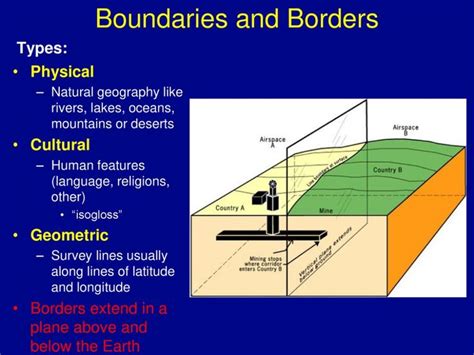
There are two primary types of superimposed boundaries:
-
Political Boundaries: These boundaries are imposed by political authorities and delineate territorial jurisdictions of states, provinces, or other subnational entities. Examples include international borders, state boundaries, and county lines.
-
Cultural Boundaries: These boundaries are based on cultural differences and can define regions with distinct languages, religions, customs, or ethnicities. They often coincide with linguistic, religious, or ethnic divisions.
Causes of Superimposed Boundaries
Superimposed boundaries can arise due to various historical, political, or cultural factors, including:
- Colonialism: European colonial powers often imposed arbitrary boundaries on colonized territories, often disregarding existing cultural or physical landscapes.
- Political Alliances: Alliances between states can lead to shifts in territorial boundaries, creating superimposed boundaries that reflect power dynamics.
- Cultural Diffusion: The spread of cultural traits, such as language or religion, can create cultural boundaries that may not align with political or physical boundaries.
Consequences of Superimposed Boundaries
Superimposed boundaries have significant consequences for human populations, including:
- Political Conflict: Political boundaries can create regions of tension and conflict, particularly when they divide cultural or ethnic groups.
- Cultural Fragmentation: Cultural boundaries can limit interactions and cooperation between different cultural communities, leading to fragmentation and loss of cultural diversity.
- Economic Disparities: Superimposed boundaries can create economic disparities between regions, as access to resources or markets may be restricted by political or cultural factors.
Superimposed Boundaries in AP Human Geography
In AP Human Geography, superimposed boundaries are analyzed in various content units, including:
– Population and Migration: Superimposed boundaries can impact population distribution and migration patterns by affecting access to resources, job opportunities, and cultural connections.
– Political Geography: The study of political boundaries explores how they define territorial sovereignty, shape political systems, and influence geopolitical relations.
– Cultural Geography: Cultural boundaries play a crucial role in defining cultural landscapes, influencing ethnic identity, and fostering cultural diversity.
– Economic Geography: Superimposed boundaries can shape economic activities by influencing trade flows, determining access to resources, and creating barriers to economic growth.
Innovative Applications of Superimposed Boundaries
The concept of superimposed boundaries can be expanded to generate ideas for innovative applications in various fields:
-
Cross-Cultural Collaboration: Understanding superimposed cultural boundaries can help foster collaboration and dialogue between different cultural communities, promoting cultural exchange and innovation.
-
Political Reconciliation: Analyzing the causes and consequences of political boundaries can contribute to reconciliation efforts in conflict-ridden regions, by addressing historical grievances and promoting peaceful coexistence.
-
Economic Development: Identifying economic disparities created by superimposed boundaries can guide targeted development initiatives aimed at bridging gaps and promoting more equitable growth.
Common Mistakes to Avoid
When analyzing superimposed boundaries, students should avoid common mistakes such as:
-
Oversimplifying Boundaries: Boundaries are not always clear-cut and can be contested or fluid over time. It is important to consider the dynamic nature of boundaries.
-
Ignoring Cultural Diversity: Cultural boundaries should not be assumed to coincide with political or physical boundaries. They may crosscut multiple jurisdictions, creating complex patterns of cultural and political influence.
-
Assuming Uniform Impacts: Superimposed boundaries do not always have uniform consequences. The impacts can vary depending on the specific context and the perspectives of different affected populations.
Frequently Asked Questions
1. What is the difference between a political boundary and a cultural boundary?
Political boundaries define territorial jurisdictions, while cultural boundaries reflect cultural differences.
2. What are some historical factors that have contributed to superimposed boundaries?
Colonialism, political alliances, and cultural diffusion are common causes of superimposed boundaries.
3. How can superimposed boundaries affect economic development?
Superimposed boundaries can create economic disparities by restricting access to resources or markets.
4. What are some innovative applications of superimposed boundaries?
Cross-cultural collaboration, political reconciliation, and economic development are potential areas where the concept can be applied.
5. What should students avoid when analyzing superimposed boundaries?
Students should avoid oversimplifying boundaries, ignoring cultural diversity, or assuming uniform impacts.
6. What are some examples of superimposed boundaries in the real world?
International borders, state boundaries, and linguistic or religious divisions are examples of superimposed boundaries.
7. How can understanding superimposed boundaries improve my understanding of global affairs?
Analyzing superimposed boundaries provides insights into geopolitical dynamics, cultural diversity, and the consequences of territorial divisions.
8. What are some ways to reduce the negative impacts of superimposed boundaries?
Promoting cross-cultural dialogue, addressing historical grievances, and implementing policies that mitigate economic disparities can help reduce the negative consequences of superimposed boundaries.