Introduction

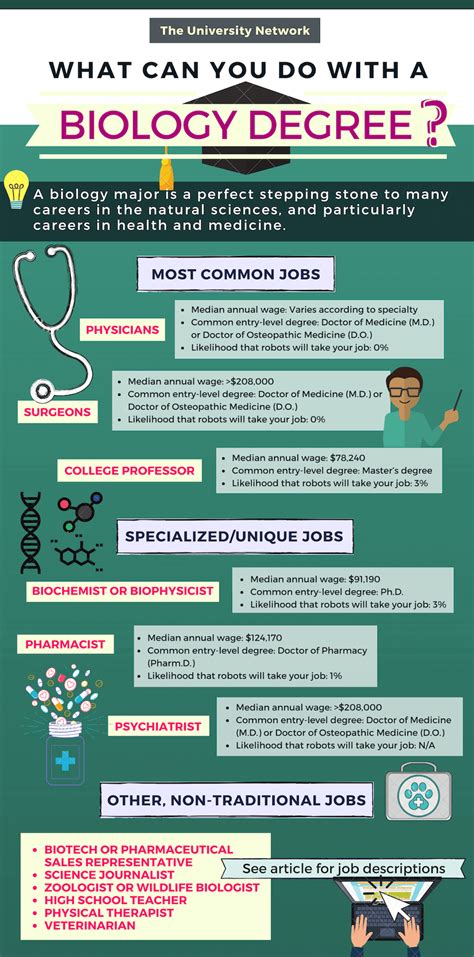
A biology degree opens doors to a wide range of exciting career paths in various industries. With a solid foundation in the study of life, biology graduates are equipped with the knowledge and skills to make meaningful contributions to society. This article provides an overview of some common and lesser-known jobs that individuals with a biology degree can pursue.
Research and Academia
1. Research Scientist
Research scientists conduct investigations to expand scientific knowledge, develop new technologies, and solve problems in fields such as medicine, biotechnology, and environmental science. With a biology degree, you can pursue a career as a research scientist in academia, government agencies, or private research firms.
According to the U.S. Bureau of Labor Statistics (BLS), the median annual salary for research scientists in May 2021 was $100,990. The job outlook is projected to grow 7% from 2021 to 2031, faster than the average for all occupations.
2. Professor
Professors teach and mentor students in universities and colleges. They conduct research, publish findings, and contribute to the advancement of their respective fields. A biology degree qualifies you for teaching positions in biology, genetics, ecology, and other related subjects.
The BLS reports that the median annual salary for postsecondary teachers was $87,980 in May 2021. The job outlook for postsecondary teachers is projected to grow 9% from 2021 to 2031, about as fast as the average for all occupations.
Healthcare
3. Medical Doctor (MD)
Medical doctors diagnose and treat human diseases and illnesses. To become an MD, you must complete a bachelor’s degree, attend medical school, and undergo residency training. A biology degree can provide a strong foundation for medical school and subsequent medical practice.
The BLS estimates that the median annual salary for physicians and surgeons was $208,000 in May 2021. The job outlook for physicians and surgeons is projected to grow 3% from 2021 to 2031, slower than the average for all occupations.
4. Physician Assistant (PA)
Physician assistants provide healthcare services under the supervision of a physician. They can perform physical exams, prescribe medications, and assist with surgeries. A biology degree can prepare you for PA school and a rewarding career in healthcare.
The BLS projects that the median annual salary for physician assistants will reach $121,530 by 2031. The job outlook for physician assistants is expected to grow 29% from 2021 to 2031, much faster than the average for all occupations.
Biotechnology
5. Bioengineer
Bioengineers design and develop medical devices, pharmaceuticals, and other products that improve human health. A biology degree provides a strong foundation for bioengineering programs and subsequent careers in biotechnology.
According to the BLS, the median annual salary for biomedical engineers was $97,410 in May 2021. The job outlook for biomedical engineers is projected to grow 7% from 2021 to 2031, faster than the average for all occupations.
6. Clinical Research Associate (CRA)
Clinical research associates manage clinical trials, ensuring compliance with regulations and patient safety. They collect and analyze data, write reports, and monitor study progress. A biology degree can qualify you for a CRA position in the pharmaceutical or medical device industry.
The BLS does not provide specific salary data for CRAs, but similar roles in the healthcare industry earn an average annual salary of around $85,000.
Environmental Science
7. Environmental Scientist
Environmental scientists study the environment, identify environmental problems, and develop solutions to protect natural resources. A biology degree with a focus on ecology or conservation can lead to a career as an environmental scientist in government agencies, consulting firms, or non-profit organizations.
The BLS reports that the median annual salary for environmental scientists and specialists was $76,530 in May 2021. The job outlook for environmental scientists and specialists is expected to grow 8% from 2021 to 2031, faster than the average for all occupations.
8. Wildlife Biologist
Wildlife biologists study the behavior, physiology, and ecology of animals. They work to conserve and manage wildlife populations and their habitats. A biology degree with a focus on zoology or ecology can prepare you for a career as a wildlife biologist in government agencies, research institutions, or zoos.
According to the BLS, the median annual salary for wildlife biologists was $63,550 in May 2021. The job outlook for wildlife biologists is projected to grow 5% from 2021 to 2031, about as fast as the average for all occupations.
Other Industries
9. Science Writer
Science writers communicate complex scientific information to the public. They write articles, reports, and other materials for magazines, newspapers, websites, and other platforms. A biology degree provides a strong foundation for science writing and a career in scientific communication.
The BLS does not provide specific salary data for science writers, but similar roles in the publishing industry earn an average annual salary of around $65,000.
10. Patent Attorney
Patent attorneys help inventors obtain patents for their inventions. They draft patent applications, conduct research, and represent clients in patent disputes. A biology degree can qualify you for patent law school and a career as a patent attorney in a law firm or patent office.
The BLS estimates that the median annual salary for patent attorneys was $161,900 in May 2021. The job outlook for patent attorneys is projected to grow 6% from 2021 to 2031, about as fast as the average for all occupations.
Emerging and Creative Jobs
11. Bioinformatician
Bioinformaticians use computational tools to analyze and interpret biological data. They develop algorithms, software, and databases to facilitate research in genomics, proteomics, and other fields. A biology degree with a strong background in computer science can prepare you for a career as a bioinformatician in academia, industry, or government.
The BLS does not provide specific salary data for bioinformaticians, but similar roles in the computer science industry earn an average annual salary of around $126,000.
12. Synthetic Biologist
Synthetic biologists design and construct new biological systems and organisms. They use genetic engineering techniques to create new materials, medicines, and other products. A biology degree with a focus on molecular biology or genetics can lead to a career as a synthetic biologist in research institutions, biotechnology companies, or environmental organizations.
The field of synthetic biology is relatively new, and salary data is not readily available. However, it is expected that synthetic biologists will earn competitive salaries in line with other research and biotechnology professionals.
Not Just Science
In addition to traditional science-related jobs, a biology degree can also pave the way for careers in non-scientific fields. Here are a few examples:
- Business: A biology degree can provide a strong foundation for business administration, marketing, and sales positions in the healthcare, biotechnology, and pharmaceutical industries.
- Law: A biology degree can qualify you for law school and a career in patent law, environmental law, or other legal fields related to science and technology.
- Education: A biology degree can lead to teaching positions in science education at the K-12 and college levels.
- Writing: A biology degree can provide a strong foundation for writing in the fields of science, health, and the environment.
Skills and Qualifications
-
Laboratory skills:
- Conducting experiments
- Analyzing data
- Operating equipment
- Problem-solving skills
-
Communication skills:
- Writing
- Speaking
- Presenting
-
Computer skills:
- Data analysis software
- Word processing software
- Presentation software
FAQs
1. What can I do with a biology degree if I don’t want to work in a lab?
A biology degree can open doors to a wide range of non-lab careers, such as business, law, education, and writing.
2. What are the job prospects for biology graduates?
Job prospects for biology graduates are generally good, with many industries offering opportunities in research, healthcare, biotechnology, and environmental science.
3. Can I earn a good salary with a biology degree?
Yes, many biology-related jobs offer competitive salaries, especially in fields such as medicine, biotechnology, and bioengineering.
4. What are some unique or emerging jobs that I can pursue with a biology degree?
Emerging jobs in biology include bioinformatician, synthetic biologist, and environmental data scientist.
5. What skills should I focus on developing as a biology student?
Develop strong laboratory skills, problem-solving skills, communication skills, and computer skills to enhance your employability.
6. How can I prepare for a career in biology?
Gain practical experience through internships, research projects, and volunteer work. Network with professionals in your field and consider pursuing graduate studies for specialized knowledge and career advancement.
Conclusion
A biology degree offers a versatile and rewarding foundation for a wide range of careers. From traditional science-related jobs to emerging fields and non-scientific professions, the possibilities are endless. By leveraging their knowledge, skills, and adaptability,