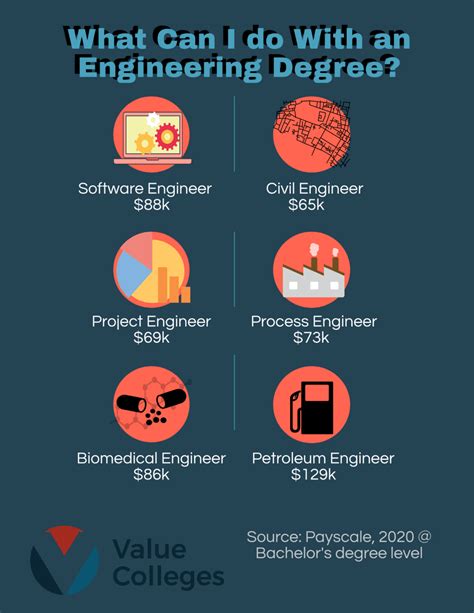
With an engineering degree, you can do a lot of things. In fact, there are so many possibilities that it can be hard to know where to start. Here are just a few of the many things you can do with an engineering degree:

- Design and build infrastructure. Engineers are responsible for designing and building the infrastructure that we rely on every day, from roads and bridges to power plants and water treatment facilities.
- Develop new technologies. Engineers are also at the forefront of developing new technologies, from medical devices to self-driving cars.
- Manage complex systems. Engineers are needed to manage complex systems, such as manufacturing plants and transportation networks.
- Solve problems. Engineers are trained to solve problems, and they use their skills to solve a wide range of problems, from environmental issues to social problems.
What Are the Benefits of an Engineering Degree?
There are many benefits to getting an engineering degree. Some of the benefits include:
- High earning potential. Engineers are among the highest-paid professionals in the world. According to the U.S. Bureau of Labor Statistics, the median annual salary for engineers was $91,010 in May 2020.
- Job security. Engineers are in high demand, and there is a strong job market for engineers. According to the U.S. Bureau of Labor Statistics, the employment of engineers is projected to grow 4% from 2019 to 2029.
- Variety of career options. Engineers can work in a variety of industries, including manufacturing, construction, transportation, and healthcare.
- Opportunities for advancement. Engineers can advance to management positions or become licensed professional engineers.
What Are the Common Mistakes to Avoid?
There are a few common mistakes that people make when pursuing an engineering degree. Some of the common mistakes to avoid include:
- Not getting enough hands-on experience. Engineering is a hands-on field, and it is important to get as much hands-on experience as possible. This can be done through internships, co-ops, and research projects.
- Not networking. Networking is important for any career, but it is especially important for engineers. Engineers need to network with other engineers, as well as with people in other fields.
- Not staying up-to-date on technology. Technology is constantly changing, and it is important for engineers to stay up-to-date on the latest technologies. This can be done through continuing education courses, reading technical journals, and attending conferences.
How to Choose the Right Engineering Degree for You
There are many different types of engineering degrees, and it is important to choose the right one for you. Some of the factors to consider when choosing an engineering degree include:
- Your interests. What are you interested in? What do you enjoy learning about?
- Your skills. What are you good at? What do you enjoy doing?
- Your career goals. What do you want to do with your engineering degree?
Once you have considered these factors, you can start to narrow down your choices. You can also talk to an academic advisor or career counselor to get more information about different engineering degrees.
What Are the Different Types of Engineering Degrees?
There are many different types of engineering degrees, but some of the most common include:
- Bioengineering: Bioengineers apply engineering principles to the fields of biology and medicine. They develop new medical devices, treatments, and therapies.
- Chemical engineering: Chemical engineers design and operate chemical plants and processes. They develop new products and processes, and they ensure that chemical plants are safe and efficient.
- Civil engineering: Civil engineers design and build infrastructure, such as roads, bridges, and buildings. They also manage water resources and protect the environment.
- Computer engineering: Computer engineers design and build computer systems. They develop new hardware and software, and they maintain and repair computer systems.
- Electrical engineering: Electrical engineers design and build electrical systems. They work with power plants, electrical grids, and telecommunications systems.
- Industrial engineering: Industrial engineers design and improve production systems. They work in factories, warehouses, and other industrial settings.
- Materials science and engineering: Materials science and engineering is the study of the properties and applications of materials. Materials scientists and engineers develop new materials and improve existing materials.
- Mechanical engineering: Mechanical engineers design and build machines. They work in a variety of industries, including manufacturing, transportation, and healthcare.
What Are the Different Career Options for Engineers?
Engineers can work in a variety of industries, including:
- Manufacturing: Engineers design and build products, such as cars, airplanes, and computers.
- Construction: Engineers design and build infrastructure, such as roads, bridges, and buildings.
- Transportation: Engineers design and build transportation systems, such as cars, trains, and airplanes.
- Healthcare: Engineers develop new medical devices, treatments, and therapies.
- Energy: Engineers design and build energy systems, such as power plants and solar panels.
- Environmental protection: Engineers develop new technologies to protect the environment, such as pollution control systems and renewable energy systems.
What Is the Future of Engineering?
The future of engineering is bright. There is a growing demand for engineers, and the field is constantly evolving. New technologies are being developed all the time, and engineers are at the forefront of these developments.
Some of the trends that are shaping the future of engineering include:
- The increasing use of robotics and automation. Robots and automation are becoming increasingly common in manufacturing and other industries. This is creating new opportunities for engineers to design and build robots and automation systems.
- The development of new materials. New materials are being developed all the time, and these new materials are opening up new possibilities for engineers. For example, new materials are being used to develop lighter and stronger cars, more efficient solar panels, and more effective medical devices.
- The rise of artificial intelligence (AI). AI is becoming increasingly powerful, and this is creating new opportunities for engineers to develop AI-powered systems. For example, AI is being used to develop self-driving cars, medical diagnosis systems, and financial trading systems.
The future of engineering is full of possibilities. With an engineering degree, you can be a part of these exciting developments and make a difference in the world.
Conclusion
An engineering degree is a valuable asset that can open up a world of possibilities. With an engineering degree, you can design and build infrastructure, develop new technologies, manage complex systems, and solve problems. You can also work in a variety of industries, including manufacturing, construction, transportation, healthcare, and energy.
If you are interested in a career in engineering, there are many different types of engineering degrees to choose from. You can also specialize in a particular area of engineering, such as bioengineering, chemical engineering, civil engineering, computer engineering, electrical engineering, industrial engineering, materials science and engineering, or mechanical engineering.
No matter what type of engineering degree you choose, you will be well-prepared for a successful career in engineering.