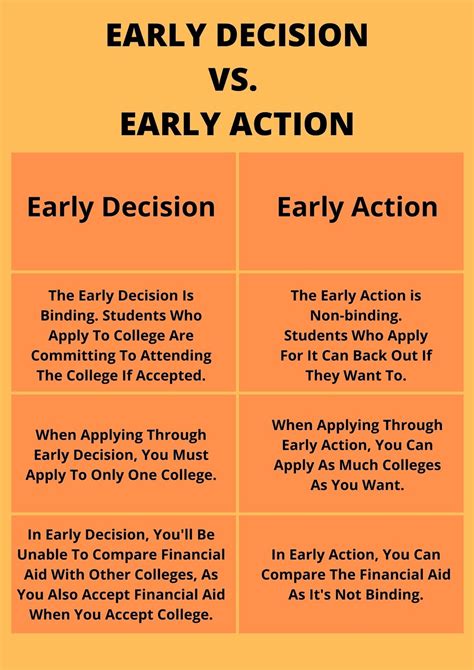
Deciding between applying early action or regular decision can be a significant step in any student’s college application journey. Both options have advantages and disadvantages, and the best choice for you will depend on your specific circumstances and goals.

What is Early Action?
Early action is a non-binding application deadline that allows students to submit their applications earlier than the regular decision deadline. This can provide several benefits:
- Increased chances of admission: Studies show that early applicants have a higher acceptance rate than regular applicants.
- More time to explore financial aid options: Students who apply early action have more time to research and apply for scholarships and financial aid.
- Reduced stress: Applying early action can alleviate some of the stress associated with the college application process.
What is Regular Decision?
Regular decision is the traditional application deadline for most colleges. This deadline is typically in the spring, and students who apply regular decision will receive their admission decisions along with all other applicants.
Pros and Cons of Applying Early Action
| Pros | Cons |
|---|---|
| Higher acceptance rates | No guarantee of admission |
| More time for financial aid | May have to commit to a school earlier |
| Reduced stress | Can be more competitive |
Pros and Cons of Applying Regular Decision
| Pros | Cons |
|---|---|
| More time to prepare your application | Lower acceptance rates |
| May have more scholarship options | More stressful |
| Can compare offers from multiple schools | May have to wait longer for admission decisions |
Factors to Consider
When deciding between early action and regular decision, there are several factors to consider:
- Your academic record: If you have a strong academic record, you may have a better chance of being admitted if you apply early action.
- Your extracurricular activities: Colleges look for well-rounded students, so if you have impressive extracurricular activities, you may want to highlight them by applying early action.
- Your personal statement: The personal statement is one of the most important parts of your college application. If you have a strong personal statement, you may want to submit it early to give the admissions committee more time to consider it.
- Application deadlines: Be sure to check the application deadlines for the schools you are applying to. Some schools have early action deadlines as early as October or November.
Which is Right for You?
The best way to decide whether to apply early action or regular decision is to weigh the pros and cons and consider your individual circumstances. If you have a strong academic record, extracurricular activities, and personal statement, you may want to consider applying early action to increase your chances of admission. However, if you need more time to prepare your application or want to compare offers from multiple schools, you may want to apply regular decision.
Conclusion
Ultimately, the decision of whether to apply early action or regular depends on your personal preferences and goals. By carefully considering the factors discussed in this article, you can make the best decision for your individual situation.
Frequently Asked Questions
-
What is the difference between early action and early decision?
Early action is non-binding, meaning you can apply to multiple schools and withdraw your application if you are accepted to another school. Early decision is binding, meaning you must attend the school you are accepted to. -
Do all colleges offer early action?
No, not all colleges offer early action. Check the websites of the schools you are interested in to see if they offer early action. -
When should I apply early action?
Early action deadlines vary from school to school, but most are in October or November. -
What are my chances of getting into college if I apply early action?
The acceptance rates for early action applicants are typically higher than for regular decision applicants. However, your chances of admission will also depend on your individual academic record, extracurricular activities, and personal statement. -
Can I apply to multiple schools early action?
Yes, you can apply to multiple schools early action. However, you can only be accepted to one school early action. -
What happens if I am not accepted early action?
If you are not accepted early action, you will be considered for regular decision.
Additional Resources
- College Board: Early Action vs. Regular Decision
- NACAC: Early Action and Early Decision
- The Princeton Review: Early Action vs. Regular Decision: What’s the Difference?