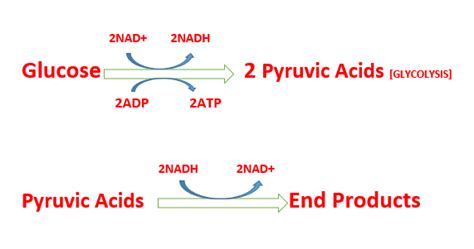
Fermentation is a metabolic process that converts sugar into acids, gases, and other products. It is a key process in the production of many foods and beverages, including beer, wine, and yogurt.

ATP Production in Fermentation
ATP (adenosine triphosphate) is the body’s main source of energy. It is a molecule that is composed of three phosphate groups, an adenine molecule, and a ribose molecule. When ATP is broken down, it releases energy that can be used to power cellular processes.
In fermentation, ATP is produced through a process called substrate-level phosphorylation. This process involves the transfer of a phosphate group from a substrate molecule to an ADP (adenosine diphosphate) molecule, resulting in the formation of ATP.
Types of Fermentation
There are two main types of fermentation:
- Alcoholic fermentation: This type of fermentation is carried out by yeast and bacteria. It converts sugar into ethanol and carbon dioxide.
- Lactic acid fermentation: This type of fermentation is carried out by lactic acid bacteria. It converts sugar into lactic acid.
ATP Yield in Fermentation
The amount of ATP produced in fermentation varies depending on the type of fermentation and the substrate used.
In alcoholic fermentation, the theoretical maximum yield of ATP is 2 moles of ATP per mole of glucose. However, in practice, the yield is typically around 1.5 moles of ATP per mole of glucose.
In lactic acid fermentation, the theoretical maximum yield of ATP is 1 mole of ATP per mole of glucose. However, in practice, the yield is typically around 0.5 moles of ATP per mole of glucose.
Factors Affecting ATP Yield
A number of factors can affect the ATP yield in fermentation, including:
- Type of fermentation
- Substrate concentration
- pH
- Temperature
- Presence of oxygen
Applications of Fermentation
Fermentation is used in a wide variety of applications, including:
- Production of food and beverages
- Production of biofuels
- Production of chemicals
- Waste treatment
Food and Beverage Production
Fermentation is a key process in the production of a wide variety of foods and beverages, including:
- Beer
- Wine
- Yogurt
- Cheese
- Bread
- Sauerkraut
- Kimchi
Fermentation gives these foods and beverages their characteristic flavors, textures, and aromas. It also helps to preserve food and extend its shelf life.
Biofuel Production
Fermentation can be used to produce biofuels, such as ethanol and biodiesel. These fuels are made from renewable resources, making them a more sustainable alternative to fossil fuels.
In the United States, ethanol is the most common biofuel. It is produced by fermenting corn sugar into ethanol and carbon dioxide. Biodiesel is produced by fermenting vegetable oils or animal fats into biodiesel and glycerol.
Chemical Production
Fermentation can be used to produce a variety of chemicals, including:
- Lactic acid
- Citric acid
- Acetic acid
- Butanol
- Acetone
These chemicals are used in a wide variety of applications, including food, beverages, pharmaceuticals, and cosmetics.
Waste Treatment
Fermentation can be used to treat waste, such as wastewater and organic waste. This process helps to break down pollutants and produce biogas, which can be used as a source of energy.
Conclusion
Fermentation is a versatile metabolic process that has a wide range of applications. It is a key process in the production of food, beverages, biofuels, and chemicals. Fermentation also plays a role in waste treatment.
Frequently Asked Questions
1. What is the difference between alcoholic fermentation and lactic acid fermentation?
Alcoholic fermentation is carried out by yeast and bacteria. It converts sugar into ethanol and carbon dioxide. Lactic acid fermentation is carried out by lactic acid bacteria. It converts sugar into lactic acid.
2. What is the ATP yield in fermentation?
The ATP yield in fermentation varies depending on the type of fermentation and the substrate used. In alcoholic fermentation, the theoretical maximum yield of ATP is 2 moles of ATP per mole of glucose. However, in practice, the yield is typically around 1.5 moles of ATP per mole of glucose. In lactic acid fermentation, the theoretical maximum yield of ATP is 1 mole of ATP per mole of glucose. However, in practice, the yield is typically around 0.5 moles of ATP per mole of glucose.
3. What are the applications of fermentation?
Fermentation is used in a wide variety of applications, including:
- Production of food and beverages
- Production of biofuels
- Production of chemicals
- Waste treatment
4. What are the factors that affect the ATP yield in fermentation?
A number of factors can affect the ATP yield in fermentation, including:
- Type of fermentation
- Substrate concentration
- pH
- Temperature
- Presence of oxygen
References
- Madigan, M. T., Martinko, J. M., Bender, K. S., Buckley, D. H., & Stahl, D. A. (2014). Brock biology of microorganisms (14th ed.). Boston: Pearson.
- Voet, D., Voet, J. G., & Pratt, C. W. (2016). Fundamentals of biochemistry: Life at the molecular level (5th ed.). Hoboken, NJ: John Wiley & Sons.
- Stryer, L., Berg, J. M., & Tymoczko, J. L. (2015). Biochemistry (8th ed.). New York: W. H. Freeman and Company.
- National Renewable Energy Laboratory. (2018, December 12). Biofuels. Retrieved from https://www.nrel.gov/fuels-and-vehicles/biofuels.html