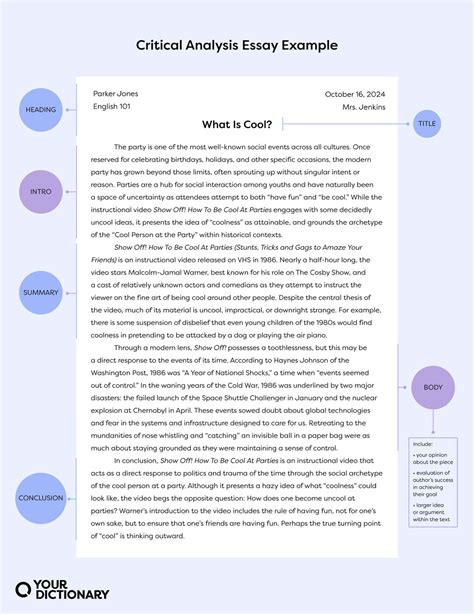
In the realm of academic writing, summary response essays stand out as a staple assignment. They challenge students to distill the essence of a given text, offering a concise yet critical analysis that demonstrates their comprehension and analytical skills. This comprehensive guide will equip you with a step-by-step approach to crafting an exceptional summary response essay.

Understanding the Task: The Key Elements of a Summary Response Essay
Before embarking on the writing process, it is crucial to grasp the core elements of a summary response essay:
-
Summary: This section provides a brief but accurate overview of the main points, arguments, and evidence presented in the original text. The summary should be clear, objective, and retain the original author’s intended meaning.
-
Response: The response section offers the student’s own analysis, critique, and interpretation of the text. It involves evaluating the author’s arguments, supporting them with evidence, and drawing connections to other relevant sources or personal experiences.
-
Integration: The final step involves seamlessly integrating the summary and response sections into a coherent and well-organized essay. This requires careful transitions and a logical flow of ideas.
Step-by-Step Guide to Writing a Summary Response Essay
1. Read and Analyze the Text
Begin by reading the given text multiple times to gain a thorough understanding of its content. Underline, highlight, or annotate key points and supporting evidence. Take note of the author’s tone, purpose, and intended audience.
2. Craft an Outline
An outline serves as a roadmap for your essay. Divide your paper into the following sections:
- Introduction: Briefly introduce the text, its author, and the main topic discussed.
- Summary: Provide a concise overview of the text’s key points and arguments.
- Response: Develop your own analysis, critique, and interpretation of the text.
- Conclusion: Summarize your main points and offer a final evaluation or reflection.
3. Write the Summary
Start the summary section with a clear indication of the text’s title and author. Concisely summarize the main points, evidence, and arguments presented in the text. Use objective language and avoid personal opinions.
4. Develop the Response
In the response section, begin by restating the thesis or main argument of the text. Then, support your own analysis and critique with evidence from the text or other relevant sources. Consider the following:
- Agreeing with the Author: Provide evidence from the text or your own experiences to support the author’s ideas.
- Disagreeing with the Author: Offer evidence to challenge the author’s arguments or provide alternative interpretations.
- Extending the Author’s Ideas: Explore new perspectives or applications of the author’s ideas and connect them to broader contexts.
5. Integrate the Summary and Response
Use transitions to connect the summary and response sections smoothly. Ensure a logical flow of ideas and avoid abrupt shifts in tone or topic.
6. Revise and Edit
Once you have completed the first draft, take a break and return to it later. Carefully review your essay for clarity, coherence, and organization. Check for any grammatical errors, typos, or inconsistencies.
Common Mistakes to Avoid
- Summarizing too much: Focus on the most important points and avoid including every detail from the original text.
- Including personal opinions in the summary: The summary should be objective and present the author’s ideas without personal biases.
- Writing a response that is too short: Provide sufficient analysis and support to demonstrate your understanding of the text and your ability to think critically.
- Quoting excessively: Use quotations sparingly and only to support your own analysis or critique.
- Ignoring the text’s context: Consider the author’s purpose, audience, and the time and place of writing when analyzing the text.
Effective Strategies for Writing a Successful Summary Response Essay
- Read actively: Annotate the text and engage with it by asking questions, highlighting key points, and making connections.
- Identify the author’s thesis: Determine the central argument or main point of the text.
- Use specific evidence: Support your analysis and critique with concrete examples and quotations from the text.
- Consider multiple perspectives: Explore different interpretations and provide evidence to support your position.
- Proofread carefully: Check for any grammatical errors, typos, or inconsistencies before submitting your essay.
Keywords
- Summary response essay
- Summarizing
- Response
- Analysis
- Critique
- Integration
- Thesis
- Evidence
- Objectivity
Tables
Table 1: Elements of a Summary Response Essay
| Element | Description |
|---|---|
| Summary | Brief overview of the text’s main points and arguments |
| Response | Student’s own analysis, critique, and interpretation |
| Integration | Seamless connection between summary and response sections |
Table 2: Common Mistakes to Avoid
| Mistake | Description |
|---|---|
| Summarizing too much | Including every detail from the original text |
| Including personal opinions in the summary | Biasing the summary with personal views |
| Writing a response that is too short | Insufficient analysis and support |
| Quoting excessively | Relying heavily on quotations |
| Ignoring the text’s context | Failing to consider the author’s purpose and audience |
Table 3: Effective Strategies
| Strategy | Description |
|---|---|
| Read actively | Annotating the text and engaging with its content |
| Identify the author’s thesis | Determining the central argument or main point |
| Use specific evidence | Supporting analysis and critique with examples and quotations |
| Consider multiple perspectives | Exploring different interpretations and providing evidence |
| Proofread carefully | Checking for errors before submitting the essay |
Table 4: Sample Outline
| Section | Content |
|---|---|
| Introduction | Introduce the text, author, and main topic |
| Summary | Provide a concise overview of the text’s key points and arguments |
| Response | Develop analysis, critique, and interpretation of the text |
| Conclusion | Summarize main points and offer a final evaluation or reflection |