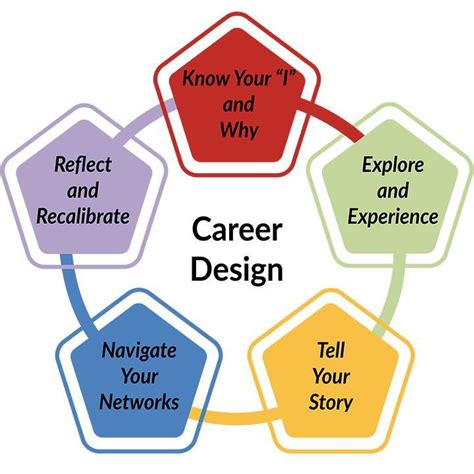
Navigating the complex landscape of career options can be daunting, but with Northeastern University’s Career Design initiative, students are empowered to forge paths that align with their aspirations and potential.
Exploring a World of Opportunities
Northeastern’s Career Design program offers a comprehensive suite of resources to help students:
- Discover their passions and interests: Through career assessments, workshops, and experiential learning opportunities, students uncover their unique strengths, values, and career drivers.
- Explore career options: With access to extensive career databases, industry experts, and alumni networks, students gain insights into various industries, functions, and job roles.
- Build essential skills: Hands-on projects, internships, and co-ops provide students with practical experience, developing competencies in communication, teamwork, problem-solving, and more.
- Connect with employers: Northeastern’s strong industry partnerships facilitate networking opportunities, career fairs, and job placements that help students make meaningful connections.
The Power of Co-operative Education
Northeastern’s renowned Co-operative Education (Co-op) program is a cornerstone of Career Design. Co-op experiences provide:
- Early exposure to the workplace: Students alternate academic semesters with paid, full-time employment in diverse industries, gaining invaluable hands-on experience.
- Career exploration: Co-ops offer a low-risk way to explore different career paths, build connections, and refine career aspirations.
- Skill development: Students develop essential skills and build their professional networks while working on real-world projects.
- Competitive advantage: Co-op students have a significant competitive advantage in the job market, with 96% being employed within 90 days of graduation, according to Northeastern’s 2022 Career Outcomes Report.
Beyond the Traditional Career Path
Career Design Northeastern recognizes that traditional career paths may not always align with students’ aspirations. The program encourages students to:
- Embrace uncertainty: Recognize that career journeys are often nonlinear and embrace the unknown.
- Develop transferable skills: Cultivate skills that are applicable across industries, such as critical thinking, adaptability, and communication.
- Create new applications: Engage in creative thinking to identify innovative ways to apply their knowledge and skills in unconventional careers.
- Student A: After exploring various career paths through Career Design workshops and Co-op experiences, she discovered her passion for environmental sustainability and pursued a career in renewable energy.
- Student B: Through a Co-op at a tech startup, he gained valuable experience in software development and data analytics, leading him to a successful career as a data scientist.
- Student C: With a background in the humanities, she leveraged Career Design’s resources to identify transferable skills and pursued a career in marketing, where her storytelling abilities and understanding of human behavior proved invaluable.
Common Mistakes to Avoid
- Not seeking professional guidance: Underestimating the value of career counseling and neglecting to engage with Career Design resources.
- Focusing on perfection: Setting unrealistic expectations and becoming discouraged by setbacks.
- Not networking: Failing to actively connect with professionals, alumni, and potential employers.
- Not exploring diverse career options: Limiting oneself to traditional career paths and failing to consider unconventional applications of skills and interests.
| Table 1: Career Design Services | Table 2: Co-op Program Statistics |
|---|---|
| Career assessments | Co-op placements: 10,000+ annually |
| Industry guest speakers | Average Co-op salary: $55,000+ |
| Resume writing workshops | Co-op students employed within 90 days of graduation: 96% |
| Networking events | Co-op opportunities in 95+ countries |
| Table 3: Career Design Success Stories | Table 4: Common Career Design Mistakes |
|---|---|
| Student A: Renewable energy | Not seeking professional guidance |
| Student B: Data scientist | Focusing on perfection |
| Student C: Marketing | Not networking |
| Not exploring diverse career options |
- What are your career aspirations and concerns?
- What skills do you possess and what areas do you want to develop?
- How can Northeastern’s Career Design program assist you in achieving your career goals?
Northeastern University’s Career Design initiative empowers students to take ownership of their career journeys and make informed decisions. By providing a comprehensive suite of resources, fostering experiential learning opportunities, and encouraging innovative thinking, Career Design Northeastern prepares students to thrive in an ever-changing job market.