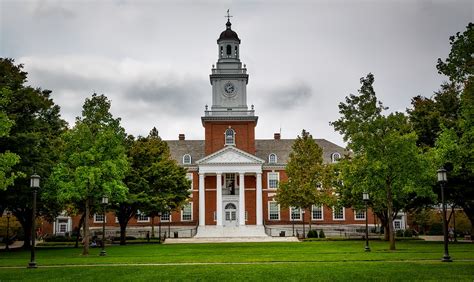
For decades, Johns Hopkins University has been consistently ranked among the top universities in the world, renowned for its academic rigor and intellectual excellence. However, the issue of grade deflation has cast a shadow over JHU’s reputation, raising concerns among students, faculty, and alumni alike.

Defining Grade Deflation
Grade deflation refers to the phenomenon where the average grades assigned in a course or institution are lower than what they would be if grades were awarded based solely on student performance. This can occur when instructors set excessively high standards, limit the number of high grades that can be awarded, or intentionally “curve” grades downwards to maintain a strict grading curve.
Evidence of Grade Deflation at JHU
Several studies have provided evidence suggesting that JHU may have a grade deflation problem. A 2008 study by the American Association of University Professors (AAUP) found that the average grade at JHU was 3.32, significantly lower than the national average of 3.57. A more recent study by the Chronicle of Higher Education in 2016 revealed that the median grade for undergraduates at JHU was a B+, while the national median was an A-.
Causes and Consequences of Grade Deflation
The causes of grade deflation at JHU are complex and multifaceted. Some possible factors include:
- High Academic Standards: JHU has a long-standing tradition of academic rigor, with professors holding students to very high expectations.
- Large Class Sizes: JHU’s large lecture courses make it difficult for instructors to provide individualized attention to students, potentially leading to a more impersonal grading system.
- Grade Distribution Policies: Some departments at JHU have implemented grade distribution policies that limit the number of A’s that can be awarded in a given course.
The consequences of grade deflation can be significant for students. Lower grades can affect scholarship eligibility, graduate school admissions, and job prospects. Additionally, grade deflation can create an unhealthy academic environment where students feel pressured to prioritize grades over learning.
Student Perspectives
Student perspectives on grade deflation at JHU vary widely. Some students believe that the university’s rigorous grading standards are necessary to maintain its academic excellence. Others argue that grade deflation creates an unfair and stressful environment that undermines their learning experience.
Faculty Perspectives
Faculty members at JHU have expressed concerns about grade deflation as well. Some faculty believe that the university’s focus on research has led to a neglect of teaching and a decline in grading standards. Others argue that JHU’s grading practices are appropriate and reflect the university’s commitment to academic excellence.
Addressing Grade Deflation
Addressing grade deflation at JHU requires a collaborative effort involving students, faculty, and university leadership. Possible solutions include:
- Revising Grading Policies: The university could review and revise grading policies to ensure that they are fair and equitable.
- Increasing Faculty Development: JHU could provide more support for faculty members in developing effective grading practices and fostering a positive learning environment.
- Encouraging Open Dialogue: The university should facilitate open dialogue between students and faculty about grade expectations and concerns.
Conclusion
The issue of grade deflation at JHU is a complex and multifaceted one. While there is evidence to suggest that the university may have a grade deflation problem, the causes and consequences of this issue are not fully understood. Addressing grade deflation requires a collaborative effort involving students, faculty, and university leadership, with the goal of creating a fair and supportive academic environment that promotes both academic excellence and student well-being.