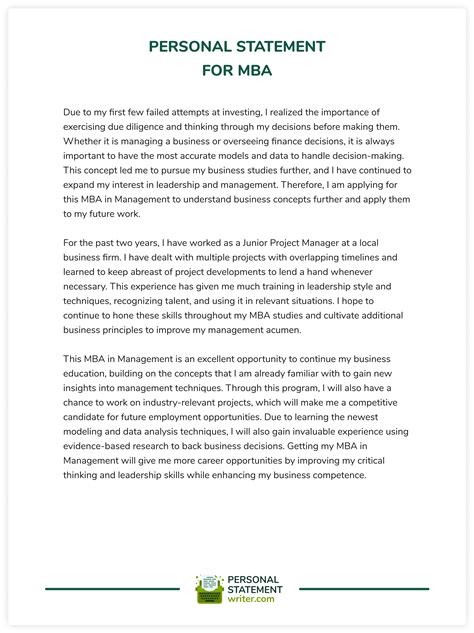
With college applications looming, writing a compelling personal statement is crucial. It’s your chance to showcase your unique qualities and make a lasting impression on admission officers. To help you craft a standout statement, we’ve curated a comprehensive guide with diverse examples and expert insights.

Understanding the Purpose of a Personal Statement
A personal statement is not simply a summary of your resume; it’s an opportunity to reveal the person behind the grades and extracurriculars. It’s a chance to tell your story, highlight your passions, and demonstrate your intellectual curiosity and critical thinking skills.
According to the National Association for College Admission Counseling (NACAC), 77% of admission officers believe that a well-written personal statement can significantly influence their decision-making process.
Crafting a Captivating Personal Statement
1. Start with a Strong Hook:
Begin your statement with a vivid anecdote, a thought-provoking question, or a powerful quote that immediately grabs the reader’s attention. For example:
“In the labyrinthine alleys of Mumbai, amidst the vibrant chaos and pungent aromas, I discovered my calling: unraveling the complexities of human behavior through the lens of anthropology.”
2. Identify a Central Theme:
Your personal statement should revolve around a central theme or narrative that highlights your character, values, or motivations. This theme should be woven throughout the essay, providing a cohesive structure.
3. Share Meaningful Experiences:
Use specific, concrete examples from your life experiences to illustrate your strengths, interests, and aspirations. These experiences could include overcoming challenges, volunteering, participating in extracurricular activities, or pursuing hobbies.
4. Reflect on Your Personal Growth:
Show admission officers how your experiences have shaped your perspectives, values, and goals. Explain how you’ve grown from these experiences and what you’ve learned about yourself.
5. Demonstrate Your Intellectual Curiosity:
Showcase your intellectual curiosity by discussing books, articles, or ideas that have sparked your interest. Analyze these concepts and demonstrate your ability to think critically and creatively.
6. Highlight Your Skills and Abilities:
While you should avoid “bragging,” subtly highlight your skills and abilities in context. Describe situations where you effectively utilized your talents, such as leadership, communication, or problem-solving.
7. Proofread and Edit Carefully:
Before submitting your personal statement, proofread it thoroughly for any grammatical errors, typos, or awkward phrasing. Ask a trusted teacher, mentor, or family member to review it for feedback.
Personal Statement Examples for Inspiration
Example 1:
“From the moment I witnessed the graceful dance of molecules under a microscope, I was captivated by the enigmatic world of science. I became a dedicated student, eager to delve deeper into the intricate workings of the natural world.”
Example 2:
“Growing up as a first-generation immigrant, I faced many challenges and prejudices. However, these experiences ignited within me a passion for social justice. I resolved to use my voice to advocate for the marginalized and bridge cultural divides.”
Example 3:
“My journey as a competitive swimmer taught me the importance of perseverance and resilience. Through countless hours of grueling training, I learned to push beyond my limits and never give up on my dreams.”
Tips and Tricks for Success
- Start early: Give yourself ample time to brainstorm, write, and edit your statement.
- Be authentic: Write in your own voice and avoid using clichés or generic language.
- Show, don’t tell: Rather than simply stating your qualities, provide concrete examples that demonstrate your character.
- Keep it concise: The ideal length for a personal statement is around 500-600 words.
- Get feedback: Ask a trusted person to review your statement and provide constructive criticism.
- Proofread carefully: Ensure your statement is free of grammatical errors and properly formatted.
Step-by-Step Approach to Writing a Personal Statement
Step 1: Brainstorm and Identify Your Theme
- Consider your experiences, interests, and motivations.
- What sets you apart from other applicants?
- What is the central message you want to convey?
Step 2: Create an Outline
- Begin with a strong hook and thesis statement.
- Divide your essay into body paragraphs that support your theme.
- Use specific examples and anecdotes to illustrate your points.
Step 3: Write Your Draft
- Focus on clearly and effectively conveying your ideas.
- Use vivid language and descriptive details.
- Avoid jargon or technical terms that the reader may not understand.
Step 4: Revise and Edit
- Check for grammatical errors, typos, and awkward phrasing.
- Ask for feedback from a trusted source.
- Make necessary revisions and improvements.
Step 5: Finalize and Submit
- Once you’re satisfied with your statement, proofread it one final time.
- Submit your essay confidently, knowing that you’ve created a compelling and unique representation of yourself.
Conclusion
Writing a personal statement for college is an opportunity to showcase your passions, values, and goals. By following the steps and examples outlined in this guide, you can craft a standout statement that will leave a lasting impression on admission officers. Remember to be authentic, specific, and concise to create a personal statement that truly represents the exceptional individual you are.