Introduction
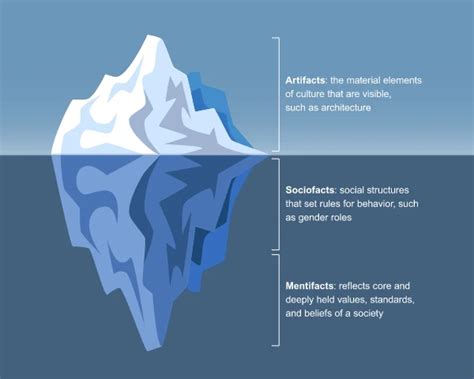
In the tapestry of human geography, mentifacts occupy a central yet often overlooked place. These are intangible cultural creations that shape human behavior, values, and beliefs. Understanding mentifacts is crucial for comprehending the complexities of human societies and their interactions with the environment.
Defining Mentifacts
Mentifacts are non-physical products of human thought and imagination. They encompass a wide range of intangible concepts, including:
- Values: Inherent beliefs about what is considered desirable or worthy.
- Norms: Socially accepted rules and expectations that govern behavior.
- Ideologies: Comprehensive systems of beliefs that guide political and social action.
- Religion: Systems of beliefs and practices that provide meaning and purpose to life.
- Art: Creative expressions that reflect cultural perspectives and values.
Significance of Mentifacts in AP Human Geography
Mentifacts play a pivotal role in several key concepts of AP Human Geography:
1. Culture: Mentifacts are fundamental elements that shape and define culture. They provide a framework for understanding how people think, act, and interact within their societies.
2. Identity: Mentifacts contribute to individual and group identity by providing shared values, beliefs, and symbols that foster a sense of belonging and purpose.
3. Social Control: Mentifacts can be used to maintain social order and regulate behavior. Norms and laws, for example, provide guidelines for acceptable conduct.
4. Globalization: Mentifacts are not static but rather dynamic and subject to change. Globalization has accelerated the flow of mentifacts across borders, leading to both cultural exchange and potential conflicts.
Types of Mentifacts
Mentifacts can be classified into two primary types:
1. Cognitive Mentifacts: Ideas, beliefs, and knowledge that are stored and communicated through language, symbols, and other forms of representation.
2. Affective Mentifacts: Emotions, values, and attitudes that are expressed and experienced through art, music, and other cultural practices.
Examples of Mentifacts
- The American Dream: A set of values that emphasizes individual freedom, opportunity, and success.
- The caste system in India: A social hierarchy based on religious and occupational categories.
- The concept of “mahana” in Hawaii: A sense of empathy and connection to the land.
- The music of Bob Marley: A powerful expression of social justice and Rastafarian culture.
- The paintings of Pablo Picasso: Artistic creations that reflect the horrors of war and the human condition.
Importance of Studying Mentifacts in AP Human Geography
1. Deepens Understanding of Culture: Mentifacts provide insights into the values, norms, and beliefs that shape human societies.
2. Facilitates Cultural Sensitivity: Studying mentifacts cultivates empathy and understanding of diverse cultures.
3. Enhances Critical Thinking: Analyzing mentifacts requires students to question assumptions, identify biases, and evaluate the impact of ideas and beliefs.
4. Prepares for College and Career: Mentifact analysis is a valuable skill for various disciplines, including social sciences, business, and law.
Challenges in Studying Mentifacts
1. Subjective Nature: Mentifacts are often subjective and difficult to measure quantitatively.
2. Cultural Bias: Researchers must be aware of their own cultural biases when interpreting mentifacts.
3. Limited Accessibility: Some mentifacts, particularly historical ones, may not be readily accessible.
Common Mistakes to Avoid
1. Overgeneralizing: Avoid making assumptions about all members of a culture based on isolated examples.
2. Confusing Mentifacts with Artifacts: Mentifacts are intangible, while artifacts are physical objects.
3. Neglecting the Importance of Context: Mentifacts should always be studied within the context of their time and place.
Applications of Mentifact Research in AP Human Geography
1. Understanding Social Issues: Mentifact analysis can shed light on social problems such as poverty, inequality, and discrimination.
2. Developing Cultural Policies: Researchers can use mentifact research to inform policies that promote cultural diversity and inclusion.
3. Fostering Cross-Cultural Communication: By understanding mentifacts, individuals can develop better communication strategies with people from different cultures.
Conclusions
Mentifacts are an integral part of human geography, shaping the ways in which we live, think, and interact. By unraveling the intangible world of mentifacts, we gain a deeper understanding of human societies and the challenges and opportunities they face in an increasingly interconnected globalized world.
Table 1: Types of Mentifacts
| Type | Characteristics | Examples |
|---|---|---|
| Cognitive | Ideas, beliefs, knowledge | Political ideologies, scientific theories, religious doctrines |
| Affective | Emotions, values, attitudes | Artistic creations, music, literature |
Table 2: Significance of Mentifacts in AP Human Geography
| Concept | Role of Mentifacts |
|---|---|
| Culture | Shape and define cultural values, norms, and beliefs |
| Identity | Provide shared values and symbols that foster a sense of belonging |
| Social Control | Maintain social order and regulate behavior |
| Globalization | Facilitate cultural exchange and potential conflicts |
Table 3: Challenges in Studying Mentifacts
| Challenge | Mitigation Strategy |
|---|---|
| Subjective Nature | Use multiple methods to collect data and triangulate findings |
| Cultural Bias | Be aware of own biases and seek perspectives from diverse sources |
| Limited Accessibility | Explore alternative sources of information, such as oral histories and archives |
Table 4: Applications of Mentifact Research
| Application | Benefits |
|---|---|
| Understanding Social Issues | Shed light on root causes and develop evidence-based solutions |
| Developing Cultural Policies | Promote cultural diversity, inclusion, and cross-cultural understanding |
| Fostering Cross-Cultural Communication | Develop better strategies for effective communication with people from different cultural backgrounds |