Introduction

In the realm of military operations, depth perception stands as a crucial cognitive faculty, enabling soldiers to navigate complex terrains, engage in precision shooting, and make informed strategic decisions. This article delves into the intricacies of military depth perception tests, their significance, and cutting-edge applications beyond the traditional military context.
Types of Military Depth Perception Tests
Various tests are employed to assess an individual’s depth perception proficiency:
-
Stereoscopic Tests: These tests present stereoscopic images to the subject, creating an illusion of depth. By adjusting a slider or aligning two objects, the subject demonstrates their ability to perceive depth from disparities in images.
-
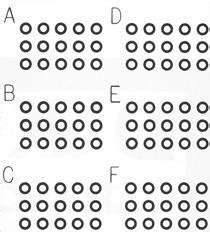
Random Dot Stereograms (RDS): RDS tests involve viewing a field of random dots that, when perceived correctly, form a hidden three-dimensional image. The time taken to identify the image serves as an indicator of depth perception acuity.
-
Pulfrich Phenomenon Tests: Based on the perceived difference in velocity of moving objects depending on depth, these tests utilize a pendulum or rotating disc to assess binocular depth perception.
Significance of Depth Perception in Military Operations
-
Navigation: Accurately gauging distances and slopes in rugged terrain is vital for safe and efficient movement. Depth perception enables soldiers to traverse obstacles, avoid hazards, and maintain optimal situational awareness.
-
Targeting: Precisely targeting opponents at various distances demands exceptional depth perception. Accurate range estimation and adjustment for parallax and elevation are crucial for effective marksmanship.
-
Situational Analysis: Depth perception aids in the interpretation of aerial reconnaissance images, reading maps, and identifying potential threats and targets in complex environments.
-
Drone Operations: Remotely piloting drones requires a heightened sense of depth perception to maintain spatial orientation, avoid collisions, and carry out precision maneuvers.
Beyond the Military: Emerging Applications
The military’s rigorous standards for depth perception have sparked innovation in related technologies and applications:
-
Driver Assistance Systems: Advanced driver assistance systems (ADAS) utilize depth perception sensors to monitor surroundings, predict potential collisions, and alert drivers to hazards.
-
Medical Imaging: Depth perception techniques, such as stereoscopic visualization, enhance medical diagnoses, surgical planning, and minimally invasive procedures.
-
Virtual Reality (VR) and Augmented Reality (AR): Depth perception is crucial for creating immersive and interactive VR/AR experiences, enabling users to navigate virtual environments and interact with digital objects.
-
Robotics: Depth perception empowers robotics to autonomously maneuver in complex environments, handle objects, and perform tasks requiring fine motor skills.
Overcoming Depth Perception Challenges
While some individuals possess innate depth perception abilities, others may face challenges due to various factors:
- Strabismus: Misalignment of the eyes can hinder binocular depth perception.
- Amblyopia (Lazy Eye): Reduced vision in one eye can impair depth perception.
- Age-Related Macular Degeneration (AMD): Central vision loss associated with AMD can compromise depth perception.
Improving Depth Perception
Individuals with depth perception difficulties can improve their abilities through:
- Vision Therapy: Specialized exercises, such as prismatic lenses and stereoscopic training, can help strengthen binocular depth perception.
- Regular Eye Exams: Routine eye examinations identify and address underlying vision conditions that may affect depth perception.
- Occupational Therapy: Occupational therapists can design customized activities to enhance depth perception in daily life tasks.
Conclusion
Military depth perception tests serve as a critical tool in assessing an individual’s spatial acuity, a skill indispensable in military operations and beyond. The adoption of these tests in various fields has led to advances in technologies and applications that enhance our interaction with the physical and virtual world. Understanding the importance of depth perception and addressing challenges associated with it enables us to unlock the full potential of human spatial cognition.
Depth Perception in Military Operations: Enhancing Precision and Safety
Navigating Complex and Hazardous Terrains
- Mountains and Hills: Depth perception enables soldiers to estimate slopes, identify obstacles, and avoid dangerous terrain that could lead to accidents or traps.
- Forests and Jungle: In dense vegetation, depth perception helps soldiers assess distances between trees, judge heights of obstacles, and detect potential ambush points.
- Urban Areas: The complex urban environment presents numerous depth perception challenges, such as judging heights of buildings, estimating gaps between vehicles, and navigating tight spaces.
Precision Targeting and Engagement
- Rifle Shooting: Depth perception is crucial for accurate rifle marksmanship, allowing soldiers to estimate target distances and adjust their aim accordingly.
- Sniper Operations: Snipers rely on exceptional depth perception to precisely hit targets at long ranges, considering factors such as bullet drop and windage.
- Artillery and Mortar Fire: Depth perception aids in determining distances to enemy positions and adjusting fire for maximum effectiveness.
Situational Analysis and Decision-Making
- Aerial Reconnaissance: Interpreting aerial reconnaissance images requires depth perception to gauge distances, heights of objects, and the topography of the terrain.
- Terrain Assessment: Assessing the terrain for potential cover, obstacles, and defensive positions demands accurate depth perception to make informed decisions.
- Command and Control: Commanders utilize depth perception when viewing maps and making strategic decisions, ensuring accurate troop deployment and coordination.
Table 1: Depth Perception Test Results in Military Operations
| Operation | Depth Perception Requirement | Importance |
|---|---|---|
| Mountain Assault | High | Safe navigation, obstacle avoidance |
| Jungle Patrol | Medium | Efficient movement, ambush detection |
| Urban Reconnaissance | High | Precise navigation, target identification |
| Sniper Operation | Extreme | Accurate targeting, mission success |
| Artillery Fire | High | Precise target location, effective fire |
Cutting-Edge Applications of Depth Perception Beyond the Military
Augmented Reality and Virtual Reality
- Immersive Gaming: Depth perception enhances the realism and engagement of immersive games, allowing players to navigate virtual worlds, interact with characters, and experience 3D environments.
- Training and Simulation: Depth perception simulators provide realistic training scenarios for military personnel, pilots, surgeons, and other professionals, improving their spatial cognition and decision-making skills.
- Virtual Museum Tours: Depth perception-enabled virtual museum tours enable viewers to explore exhibits from different perspectives, interact with objects, and gain a more immersive understanding of historical events.
Robotics and Automation
- Autonomous Driving: Depth perception sensors in autonomous vehicles enable the detection and avoidance of obstacles, pedestrians, and other vehicles on the road.
- Industrial Automation: Depth perception-equipped robotics perform complex tasks in industrial settings, such as sorting objects, inspecting products, and assembling components.
- Search and Rescue Operations: Depth perception-enabled drones can navigate disaster zones, locate victims, and provide critical situational data to rescue teams.
Table 2: Depth Perception Applications in Augmented Reality, Virtual Reality, and Robotics
| Application | Depth Perception Requirement | Benefits |
|---|---|---|
| AR/VR Content Design | High | Realistic and immersive user experiences |
| Flight Simulator Training | Extreme | Improved pilot spatial awareness and judgment |
| Surgical Simulation | High | Enhanced surgical precision and confidence |
| Autonomous Vehicle Navigation | Extreme | Safe and efficient road navigation |
| Industrial Robot Inspection | Medium | Accurate object identification and quality control |
| Disaster Response Drone | High | Effective victim localization and situational assessment |
Optimizing Depth Perception: Strategies and Considerations
Vision Therapy
- Prismatic Lenses: Prismatic lenses can correct misalignments of the eyes, improving binocular depth perception.
- Stereoscopic Exercises: Stereoscopic exercises involve viewing images with different perspectives, training the brain to merge them into a single three-dimensional image.
- Virtual Reality Training: Virtual reality simulations can provide immersive environments for practicing depth perception skills.
Occupational Therapy
- Hand-Eye Coordination Exercises: Exercises that involve reaching for objects or manipulating tools enhance depth perception through hand-eye coordination.
- Spatial Orientation Activities: Activities such as navigation exercises, map reading, and puzzle solving improve spatial cognition and depth perception.
- Sensory Integration Therapy: Sensory integration therapy integrates visual, vestibular, and proprioceptive inputs to promote overall spatial perception, including depth.
Table 3: Vision Therapy and Occupational Therapy Strategies for Depth Perception Enhancement
| Strategy | Description | Benefits |
|---|---|---|
| Prismatic Lenses | Correct eye misalignments | Improved binocular depth perception |
| Stereoscopic Exercises | Merge images with different perspectives | Enhanced brain depth processing |
| Virtual Reality Training | Immersive depth perception practice | Improved spatial cognition and judgment |
| Hand-Eye Coordination Exercises | Increased hand-eye coordination | Improved depth perception for actions |
| Spatial Orientation Activities | Enhanced spatial awareness | Enhanced depth perception for navigation |
| Sensory Integration Therapy | Integrates sensory inputs | Overall improvement in spatial perception and depth |
Challenges and Corrective Measures for Depth Perception
Challenges
- Strabismus: Strabismus, or misalignment of the eyes, can prevent the brain from fusing images correctly, resulting in reduced depth perception.
- Amblyopia: Amblyopia, also known as lazy eye, occurs when the brain suppresses the vision of one eye, leading to impaired depth perception.
- Age-Related Macular Degeneration (AMD): AMD damages the central area of the retina, affecting visual acuity and depth perception.
Corrective Measures
- Strabismus Correction: Strabismus surgery or vision therapy can correct eye misalignments, enhancing depth perception.
- Amblyopia Treatment: