Introduction
Poetry analysis is a valuable skill for understanding and appreciating literature. By closely examining a poem’s elements, we can uncover its meaning, themes, and symbolism. In this article, we will provide a step-by-step guide to sample poem analysis, using the poem “Ode to a Nightingale” by John Keats as an example.
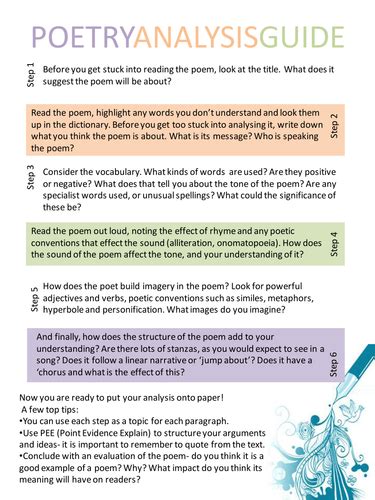
Step 1: Read the Poem Carefully
Begin by reading the poem multiple times. As you read, pay attention to the following:
- The poem’s title
- The number of stanzas and lines
- The rhyme scheme
- The meter and rhythm
Step 2: Identify the Speaker and Situation
Who is the voice behind the poem? What is their situation? This information can provide context for understanding the poem’s meaning.
Step 3: Examine the Language
Look at the poem’s language. Consider the following:
- Figurative language (e.g., similes, metaphors, personification)
- Symbolism
- Sensory imagery
- Allusions
Step 4: Determine the Theme
The theme of a poem is its central idea or message. It can be explicit or implicit. Look for patterns, repeated words, or phrases that suggest the poem’s theme.
Step 5: Analyze the Structure
The structure of a poem can reveal its organization and development. Consider the following:
- The length and arrangement of stanzas
- The relationship between stanzas
- The use of transitions
Step 6: Interpret the Poem
Based on your analysis, interpret the poem’s meaning. This involves combining your observations and forming a coherent interpretation of the poem’s message.
Example: “Ode to a Nightingale” by John Keats
Step 1: Read the Poem Carefully
My heart aches, and a drowsy numbness pains
My sense, as though of hemlock I had drunk,
Or emptied some dull opiate to the drains
One minute past, and Lethe-wards had sunk:
‘Tis not through envy of thy happy lot,
But being too happy in thine happiness,—
That thou, light-winged Dryad of the trees,
In some melodious plot
Of beechen green, and shadows numberless,
Singest of summer in full-throated ease.
Step 2: Identify the Speaker and Situation
The speaker is a poet who is in a state of despair and longing. He is listening to a nightingale sing in nature.
Step 3: Examine the Language
- Figurative language:
- “drowsy numbness pains / My sense” (personification)
- “Lethe-wards had sunk” (allusion to the river of forgetfulness in Greek mythology)
- Symbolism:
- Nightingale: freedom, joy, nature
- Summer: beauty, abundance
- Sensory imagery:
- “heart aches”
- “drowsy numbness”
- “melodious plot”
Step 4: Determine the Theme
The theme of the poem is the speaker’s longing for escape from his earthly pain and the beauty and joy he finds in nature.
Step 5: Analyze the Structure
The poem consists of two stanzas, each with eight lines. The stanzas are separated by a shift in tone, with the first stanza focusing on the speaker’s pain and the second stanza transitioning to his appreciation of the nightingale’s song.
Step 6: Interpret the Poem
The poem expresses the speaker’s deep desire for joy and freedom. He finds solace in the beauty of nature, but ultimately recognizes that his earthly suffering is inevitable. The poem explores the tension between the human desire for happiness and the reality of mortality.
Conclusion
Sample poem analysis is a valuable tool for understanding and appreciating poetry. By following the steps outlined in this article, you can effectively analyze poems and discover their meaning, themes, and symbolism.