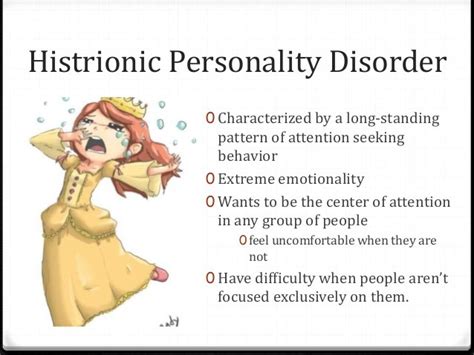
Histrionic behavior, characterized by excessive emotional expression and attention-seeking behavior, often manifests in interpersonal relationships and social interactions. This flamboyant and over-the-top behavior can be challenging to navigate, both for those exhibiting it and for those interacting with them.

Causes and Characteristics of Histrionic Behavior
Histrionic behavior is primarily attributed to a combination of genetic and environmental factors. According to the American Psychological Association, individuals with histrionic personality disorder (HPD) exhibit a dramatic and attention-seeking pattern of behavior that often results in intense interpersonal relationships.
Common characteristics of histrionic behavior include:
- Excessively emotional: Histrionic individuals display intense and volatile emotions, which can fluctuate rapidly and be overly dramatic.
- Attention-seeking: They crave attention and approval, often engaging in attention-grabbing behaviors such as dressing provocatively, speaking loudly, or interrupting others.
- Suggestibility: Histrionic individuals are easily influenced by others and may change their opinions or beliefs quickly to gain acceptance.
- Self-dramatization: They tend to exaggerate their emotions and experiences, making them appear more significant than they actually are.
Impact of Histrionic Behavior on Relationships
Histrionic behavior can significantly impact interpersonal relationships. Their dramatic and attention-seeking behaviors can be overwhelming and exhausting for others, leading to strained relationships and social isolation.
- Romantic relationships: Histrionic individuals often engage in relationships that are characterized by intense passion and volatility. They may become overly possessive or jealous and may have difficulty maintaining healthy boundaries.
- Social relationships: Histrionic individuals may struggle to form and maintain genuine friendships. Their attention-seeking behavior can be perceived as manipulative or self-centered, leading to difficulties in connecting with others.
- Workplace relationships: Histrionic behavior can also create challenges in the workplace. Their need for attention and approval can interfere with their ability to focus on their work and collaborate effectively with colleagues.
Treating Histrionic Behavior
Treatment for histrionic behavior typically involves psychotherapy, which aims to help individuals understand and modify their behavior patterns. Cognitive-behavioral therapy (CBT) is commonly used to address the underlying cognitions and behaviors that contribute to histrionic behavior.
- Dialectical behavior therapy (DBT): DBT is a skills-based therapy that teaches individuals how to manage their emotions, improve their interpersonal relationships, and reduce self-harming behaviors.
- Psychodynamic therapy: Psychodynamic therapy explores unconscious motivations and conflicts that may be contributing to histrionic behavior.
New Frontier in Histrionics: The Emergent Concept of “Melodrama”
In recent years, researchers have coined the term “melodrama” to describe a new approach to understanding and addressing histrionic behavior. Melodrama refers to the exaggerated and emotionally charged style of performance often seen in histrionic individuals.
This concept emphasizes the role of culture and society in shaping histrionic behavior and suggests that it may be a response to societal pressures to conform to traditional gender roles and expectations. Melodrama theory encourages healthcare professionals to consider the cultural and social context of histrionic behavior and to approach treatment with empathy and understanding.
Tables: Data on Histrionic Behavior
Table 1: Prevalence of HPD in the General Population
| Country | Prevalence |
|---|---|
| United States | 2-3% |
| United Kingdom | 2-4% |
| Canada | 2-5% |
Table 2: Impact of HPD on Social Relationships
| Relationship Type | Impact |
|---|---|
| Romantic relationships | Intense passion, volatility, possessiveness, jealousy |
| Social relationships | Difficulty forming and maintaining friendships, perceived as manipulative or self-centered |
| Workplace relationships | Attention-seeking behavior interferes with work performance and collaboration |
Table 3: Treatment Options for HPD
| Therapy Type | Focus |
|---|---|
| Cognitive-behavioral therapy (CBT) | Modifying cognitions and behaviors |
| Dialectical behavior therapy (DBT) | Skills-based therapy for managing emotions and improving relationships |
| Psychodynamic therapy | Exploring unconscious motivations and conflicts |
Table 4: Melodrama Theory in Histrionic Behavior
| Principle | Implications |
|---|---|
| Recognition of cultural and societal influences | Healthcare professionals should consider the social context of histrionic behavior |
| Emphasis on empathy and understanding | Treatment should be tailored to the individual’s cultural and social experiences |
| Integration of cultural perspectives | Healthcare professionals should incorporate cultural perspectives into their understanding of histrionic behavior |
Useful Tips for Interacting with Histrionic Individuals
- Be patient and understanding: Remember that histrionic behavior is a complex and often involuntary response to underlying emotional distress.
- Set clear boundaries: Communicate your expectations and limits to the individual, while remaining respectful and compassionate.
- Focus on the present moment: Avoid getting caught up in the individual’s emotional outbursts or dramatic storytelling. Instead, focus on the present situation and address specific behaviors.
- Offer support and encouragement: Let the individual know that you care and support them, but also encourage them to seek professional help if necessary.
- Educate yourself about histrionic behavior: Understanding the causes and characteristics of histrionic behavior can help you better navigate interactions with individuals who exhibit these behaviors.
FAQs about Histrionic Behavior
1. What is the difference between histrionic behavior and narcissism?
Histrionic behavior is characterized by excessive emotional expression and attention-seeking, while narcissism is characterized by an inflated sense of self-importance, a need for admiration, and a lack of empathy.
2. Is histrionic behavior a mental illness?
Histrionic personality disorder (HPD) is a mental health condition that involves a pattern of histrionic behavior. However, not all individuals who exhibit histrionic behavior meet the criteria for a diagnosis of HPD.
3. Can histrionic behavior be cured?
HPD is a chronic mental health condition, but treatment can help individuals manage their symptoms and improve their quality of life.
4. What is the prognosis for individuals with histrionic behavior?
The prognosis for individuals with histrionic behavior varies depending on the severity of their symptoms and their willingness to seek treatment. With treatment, many individuals can learn to manage their behavior and live fulfilling lives.
5. What are the societal implications of histrionic behavior?
Histrionic behavior can have a negative impact on society by creating strained relationships, fostering mistrust, and contributing to social isolation.
6. How can we prevent histrionic behavior?
There is no specific way to prevent histrionic behavior, but early identification and intervention can help individuals manage their symptoms and reduce the potential negative consequences.
7. What are some of the latest research findings on histrionic behavior?
Recent research suggests that histrionic behavior may be linked to genetic and environmental factors, as well as cultural and social pressures. Additionally, emerging theories such as melodrama theory emphasize the importance of considering the cultural context of histrionic behavior.
8. What resources are available for individuals with histrionic behavior and their loved ones?
There are various resources available for individuals with histrionic behavior and their loved ones, including support groups, online forums, and mental health professionals who specialize in treating personality disorders.