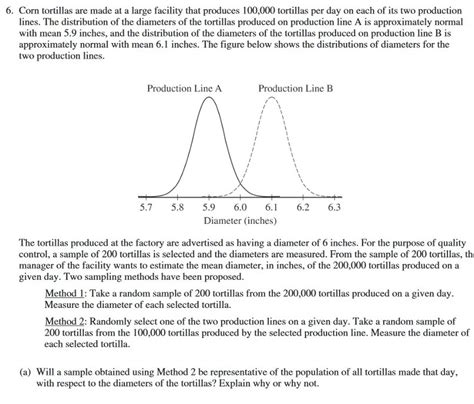
Overview: Demystifying the FRQ Section
The AP Statistics Free Response Questions (FRQs) constitute a crucial component of the AP Statistics exam. These questions demand not only statistical knowledge but also the ability to apply concepts and solve complex problems. Understanding the nuances of the FRQs is essential for maximizing your score.
Key Insights:
- The FRQ section typically comprises six questions, each worth a significant portion of the exam score.
- Questions encompass a wide spectrum of statistical topics, including probability, inference, and hypothesis testing.
- Students must not only demonstrate competency in statistical techniques but also exhibit critical thinking and problem-solving skills.
- Careful time management and strategic allocation of time are crucial for completing the FRQs within the allotted duration.
Masterful Strategies for Success:
1. Cultivate a Deep Understanding of Concepts:
- Delve deep into the fundamental statistical concepts covered in the AP Statistics curriculum.
- Engage with textbooks, online resources, and videos to reinforce your understanding.
- Practice applying concepts to a variety of problems and scenarios.
2. Enhance Problem-Solving Abilities:
- Develop a systematic approach to problem-solving.
- Identify the relevant information, formulate hypotheses, and apply appropriate statistical techniques.
- Practice interpreting and communicating your findings concisely.
3. Master Key Statistical Formulas and Theorems:
- Familiarize yourself with the essential statistical formulas and theorems.
- Understand their applications and limitations.
- Use formulas and theorems to support your reasoning and justify your conclusions.
4. Optimize Time Management:
- Allocate time wisely to each question based on its length and difficulty.
- Prioritize answering the easier questions first to build confidence and momentum.
- If you encounter a particularly challenging question, don’t spend excessive time on it. Move on and return to it later if time permits.
5. Utilize Proper Notation and Presentation:
- Adhere to the correct statistical notation and conventions.
- Present your solutions clearly and logically, using accurate terminology and symbols.
- Organize your responses to facilitate easy comprehension by the grader.
Common Pitfalls to Avoid:
1. Attempting to Memorize Solutions:
- Don’t merely memorize solutions to specific FRQs.
- Focus on developing a deep understanding of statistical principles and problem-solving techniques.
2. Neglecting Conceptual Understanding:
- Avoid relying solely on formulas and equations.
- Ensure you grasp the underlying statistical concepts and can apply them to novel scenarios.
3. Inappropriate Use of Calculators:
- While calculators are permitted on the exam, use them judiciously.
- Focus on using them for complex calculations, not for basic arithmetic.
- Ensure you provide the necessary steps and reasoning in your solutions.
4. Inadequate Justification:
- Don’t merely state your conclusions; provide thorough justification for your reasoning.
- Explain your statistical methods, assumptions, and any limitations.
5. Poor Communication:
- Avoid using ambiguous language or jargon.
- Present your solutions in a clear and concise manner.
- Proofread your responses for any errors in grammar or spelling.
Examples of Effective Strategies:
Question Type: Goodness-of-Fit Test
- Determine the appropriate goodness-of-fit test for the given data.
- Calculate the test statistic and p-value.
- Interpret the results in the context of the problem.
Question Type: Hypothesis Testing
- Formulate the null and alternative hypotheses.
- Conduct the appropriate statistical test to compare the two hypotheses.
- Determine the p-value and draw a conclusion based on the level of significance.
Question Type: Confidence Interval
- Identify the appropriate confidence level and sample size.
- Calculate the confidence interval and interpret the results.
Question Type: Regression Analysis
- Fit a regression line to the given data.
- Interpret the slope, intercept, and R-squared value.
- Use the regression line to make predictions and evaluate the accuracy of the model.
Tables to Aid Exam Preparation:
| Topic | Subtopics | Concepts | Formulas |
|---|---|---|---|
| Descriptive Statistics | Measures of central tendency | Mean, median, mode, variance, standard deviation | Sample mean: x̅ = Σx / n |
| Inferential Statistics | Confidence intervals | Point estimate, level of confidence, margin of error | Confidence interval: (x̅ – z * σ / √n, x̅ + z * σ / √n) |
| Probability | Conditional probability | Independent events, dependent events, Bayes’ theorem | Bayes’ theorem: P(A |
| Regression Analysis | Linear regression | Slope, intercept, correlation coefficient | Regression line equation: y = mx + b |
Engaging Customers’ Perspectives:
- Ask customers for feedback on the effectiveness of your strategies.
- Inquire about any specific challenges or difficulties they encountered.
- Seek suggestions for improvements and incorporate them into your exam preparation.
Conclusion:
Excelling in the AP Stat FRQ section requires a comprehensive understanding of statistical concepts, coupled with robust problem-solving and analytical skills. By implementing the strategies outlined above, you can significantly improve your chances of achieving a high score and demonstrating your mastery of statistical thinking. Remember, the key to success lies in relentless practice, meticulous attention to detail, and an unwavering commitment to excellence.