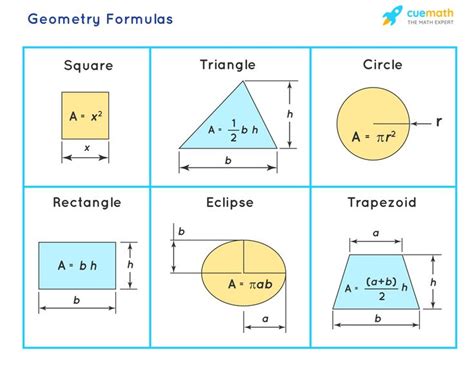
Geometry is the study of shapes and their properties. It is a foundational subject in mathematics that has applications in a wide variety of fields, including architecture, engineering, and computer science.
But what comes after geometry? What are the next steps for students who have mastered the basics of this subject?
There are many different paths that students can take after geometry. Some may choose to continue their study of mathematics by taking courses in algebra, trigonometry, and calculus. Others may choose to focus on specific applications of geometry, such as engineering or computer science.
Still others may choose to pursue a career in a field that does not require a strong background in geometry. However, regardless of their future plans, all students can benefit from a solid foundation in this subject.
The Benefits of Studying Geometry
Geometry is not just a subject that is learned in school and then forgotten. The skills that students develop in geometry can be applied to a wide variety of real-world situations.
For example, geometry can be used to:
- Design buildings and bridges
- Create computer graphics
- Solve engineering problems
- Understand the natural world
In addition to its practical applications, geometry also has a number of cognitive benefits. For example, geometry can help students to:
- Develop their spatial reasoning skills
- Improve their problem-solving abilities
- Increase their creativity
What is After Geometry?
So, what is after geometry? The answer to this question depends on the individual student and their future plans. However, there are a number of different options available to students who have mastered the basics of geometry.
Algebra
Algebra is the study of symbols and their operations. It is a more abstract subject than geometry, but it is also essential for understanding many other areas of mathematics. Algebra can be used to:
- Solve equations
- Graph functions
- Model real-world situations
Trigonometry
Trigonometry is the study of triangles and their properties. It is a branch of mathematics that is used in a wide variety of applications, including surveying, navigation, and engineering. Trigonometry can be used to:
- Find the length of sides of triangles
- Calculate angles
- Solve problems involving right triangles
Calculus
Calculus is the study of change. It is a more advanced subject than algebra or trigonometry, but it is also one of the most powerful tools in mathematics. Calculus can be used to:
- Find the rate of change of a function
- Calculate the area under a curve
- Solve optimization problems
- Model real-world phenomena
Other Options
In addition to algebra, trigonometry, and calculus, there are a number of other options available to students who have mastered the basics of geometry. These options include:
- Engineering: Engineering is the application of mathematics and science to the design and construction of structures, machines, and systems. Engineers use geometry to design buildings, bridges, and other structures.
- Computer science: Computer science is the study of computers and their applications. Computer scientists use geometry to create computer graphics, design user interfaces, and solve computational problems.
- Architecture: Architecture is the art and science of designing buildings and other structures. Architects use geometry to create beautiful and functional buildings that meet the needs of their clients.
Conclusion
Geometry is a foundational subject in mathematics that has applications in a wide variety of fields. Students who have mastered the basics of geometry can choose from a number of different paths, including algebra, trigonometry, calculus, engineering, computer science, and architecture.