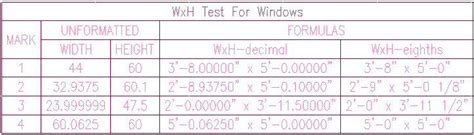
Understanding the importance of dimensions
In the world of measurements, dimensions play a crucial role in determining the size and shape of objects. Whether you’re designing a building, framing a photograph, or simply describing the dimensions of a box, understanding the correct order of dimensions can make a significant difference.
In the case of rectangular objects, two dimensions are typically used to describe their size: width and height. However, the order in which these dimensions are presented can vary depending on the context and industry.
The two main conventions for specifying rectangular dimensions are:
1. HxW (Height x Width)
2. WxH (Width x Height)
The first format, HxW, is commonly used in the following areas:
- Architecture and construction
- Real estate listings
- Painting and photography
- Paper and document sizes
In this format, the height is listed first, followed by the width. For example, a room with a height of 10 feet and a width of 12 feet would be described as 10′ x 12′.
The second format, WxH, is typically used in the following areas:
- Electronics (e.g., TV screens, computer monitors)
- Textiles and fabrics
- Product dimensions (e.g., boxes, furniture)
- Image resolution
In this format, the width is listed first, followed by the height. For example, a TV screen with a width of 50 inches and a height of 30 inches would be described as 50″ x 30″.
Common Mistakes to Avoid
To avoid confusion and ensure accuracy, it’s important to pay attention to the correct order of dimensions when specifying the size of rectangular objects. Some common mistakes to avoid include:
- Using the wrong order of dimensions (e.g., listing width before height)
- Mixing different conventions (e.g., using HxW for one dimension and WxH for another)
- Using units of measurement that don’t match (e.g., inches for height and feet for width)
Why Dimensions Matter
Understanding the correct order of dimensions is essential for several reasons:
- Accuracy: Correct dimensions ensure that objects fit properly and meet specifications.
- Communication: Using the same dimension convention helps avoid confusion and misinterpretation.
- Consistency: Establishing a consistent dimension convention promotes standardization and clarity.
Benefits of Using the Correct Dimensions
Using the correct dimensions offers numerous benefits:
- Accurate planning: Correct dimensions allow for proper space planning and design.
- Efficient construction: Accurate dimensions reduce errors and waste during construction projects.
- Product compatibility: Matching dimensions ensures that products fit together properly.
- Clear communication: Consistent dimension conventions simplify communication and reduce misunderstandings.
To make it easier to remember the difference between HxW and WxH, we’ve created four useful tables:
Table 1: HxW Dimensions
| Industry | Description | Example |
|---|---|---|
| Architecture | Room size | 12′ x 15′ |
| Real estate | Property area | 2 acres x 15 acres |
| Painting | Canvas size | 24″ x 36″ |
| Paper | Letter size | 8.5″ x 11″ |
Table 2: WxH Dimensions
| Industry | Description | Example |
|---|---|---|
| Electronics | TV screen | 65″ x 38″ |
| Textiles | Fabric width | 54″ x 12 yards |
| Product dimensions | Box size | 10″ x 6″ x 3″ |
| Image resolution | Camera photo | 4032 x 3024 |
Table 3: Dimension Conventions by Industry
| Industry | Convention |
|---|---|
| Architecture | HxW |
| Electronics | WxH |
| Real estate | HxW |
| Photography | HxW |
| Paper and document sizes | HxW |
| Textiles | WxH |
Table 4: Common Dimension Units
| Unit | Abbreviation |
|---|---|
| Inches | “ |
| Feet | ‘ |
| Yards | yd |
| Centimeters | cm |
| Meters | m |
** dimensionize** (verb): To apply dimensions to something or to consider something in terms of its dimensions.
This creative new word can be used to generate ideas for new applications that involve dimensions, such as:
- Dimension-based search engines: Search engines that allow users to filter results based on specific dimensions.
- Dimensional modeling tools: Software tools that help architects and engineers create accurate and detailed 3D models of buildings and structures.
- Dimension-aware manufacturing: Manufacturing processes that automatically adjust to different dimensions, reducing waste and improving efficiency.
Conclusion
Understanding the difference between HxW and WxH is crucial for communicating and interpreting dimensions correctly. By following the correct conventions and avoiding common mistakes, individuals can ensure accuracy, clarity, and consistency in their work.