Psychiatrists are medical doctors who specialize in the diagnosis, treatment, and prevention of mental, emotional, and behavioral disorders. They play a crucial role in improving the mental well-being of individuals and communities. To become a psychiatrist, a rigorous and lengthy educational journey is required.

Educational Requirements
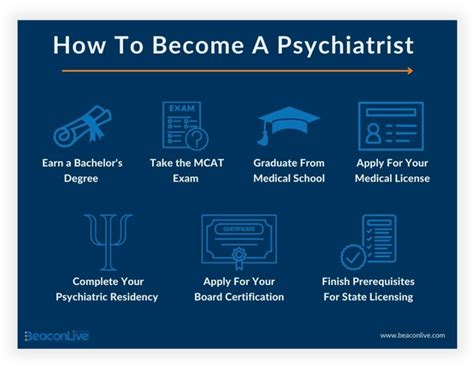
The path to becoming a psychiatrist typically involves the following steps:
- Undergraduate Education (4 years): Obtain a bachelor’s degree in a related field such as psychology, biology, or neuroscience.
- Medical School (4 years): Enroll in medical school and earn a Doctor of Medicine (M.D.) or Doctor of Osteopathic Medicine (D.O.) degree.
- Psychiatry Residency (4 years): Complete a residency program in psychiatry after medical school. This involves supervised clinical training in various settings such as hospitals, clinics, and community mental health centers.
- Board Certification (Optional): Pass the American Board of Psychiatry and Neurology (ABPN) certification exam to obtain board certification in psychiatry.
Residency Training
During psychiatry residency, trainees receive comprehensive training in:
- Assessment and Diagnosis: Evaluating patients’ mental health conditions using interviews, physical exams, and psychological tests.
- Treatment Planning: Developing customized treatment plans that may include medication, psychotherapy, or a combination of both.
- Medication Management: Prescribing and monitoring medications to treat mental health disorders.
- Psychotherapy: Providing various forms of psychotherapy, such as cognitive-behavioral therapy, psychodynamic therapy, and supportive therapy.
- Emergency Psychiatry: Managing acute mental health crises and providing emergency care.
- Research and Scholarship: Conducting research and staying up-to-date on the latest advancements in the field.
Board Certification
Board certification is a voluntary process but is highly respected in the medical field. To become board-certified in psychiatry, psychiatrists must complete the ABPN certification exam, which covers a wide range of topics related to psychiatry. Board certification indicates a high level of knowledge and clinical competence.
Educational Timeline
The total educational timeline for becoming a psychiatrist is typically around 12 years (4+4+4). This includes undergraduate education, medical school, and psychiatry residency. Board certification may add an additional year or two to this timeline.
Importance of Education
The extensive education and training required to become a psychiatrist underscores the importance of this profession. Psychiatrists play a vital role in addressing the growing mental health needs of society. They provide evidence-based care, improve patient outcomes, and reduce the burden of mental illness.
Frequently Asked Questions
- How long does it take to become a psychiatrist? Typically 12 years (4+4+4), plus optional board certification.
- What is the difference between a psychiatrist and a psychologist? Psychiatrists are medical doctors who can prescribe medications, while psychologists typically hold a doctoral degree in psychology and focus on psychotherapy.
- What are the career prospects for psychiatrists? Psychiatrists are in high demand due to the rising prevalence of mental health disorders. They can work in a variety of settings, including hospitals, clinics, private practice, and academia.
- What is the average salary for psychiatrists? According to the American Medical Association, the median annual salary for psychiatrists in the United States is approximately $220,000.
Conclusion
Becoming a psychiatrist is a rewarding but challenging career path that requires a significant investment of time, effort, and education. The extensive training and expertise of psychiatrists enable them to provide compassionate and effective care for individuals with mental health disorders.