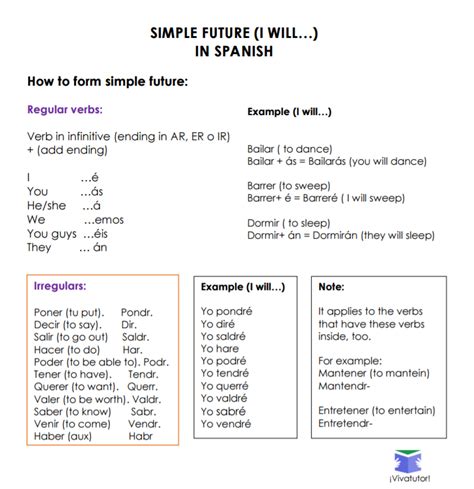
Whether you’re planning a trip to a Spanish-speaking country or simply want to expand your vocabulary, knowing how to say “I will be” in Spanish is essential. This versatile phrase can be used in a variety of situations, from making plans to expressing intentions.
Conjugating “I Will Be” in Spanish
The Spanish verb “to be” is “ser” or “estar”. “Ser” is used to describe permanent or essential qualities, while “estar” is used to describe temporary states or conditions. In this case, we will use “estar” because we are talking about a temporary state of being.
To conjugate “estar” in the future tense, we use the following formula:
yo estaré
tú estarás
él/ella/usted estará
nosotros/nosotras estaremos
vosotros/vosotras estaréis
ellos/ellas/ustedes estarán
Using “I Will Be” in Spanish
Here are some examples of how to use “I will be” in Spanish:
-
I will be there tomorrow.
Estaré allí mañana. -
I will be studying Spanish next year.
Estaré estudiando español el año que viene. -
I will be happy to help you.
Estaré encantado de ayudarte.
Common Mistakes to Avoid
When using “I will be” in Spanish, there are a few common mistakes to avoid:
- Using “ser” instead of “estar”: Remember that “ser” is used for permanent qualities, while “estar” is used for temporary states.
- Conjugating the verb incorrectly: Make sure to conjugate the verb “estar” correctly according to the subject pronoun.
- Using the wrong tense: The future tense is used to express actions that will happen in the future. Do not use the present tense to express future actions.
Pros and Cons of Using “I Will Be” in Spanish
Pros:
- Versatile: Can be used in a variety of situations
- Easy to conjugate: The future tense of “estar” is regular and easy to learn
- Clear: Unmistakably expresses a future action or intention
Cons:
- Can be formal: The future tense can sound formal in some contexts
- May not always be necessary: In some cases, the present tense can be used to express future actions
Conclusion
Knowing how to say “I will be” in Spanish is a valuable skill that can help you communicate effectively in a variety of situations. By following the tips and avoiding the common mistakes outlined above, you can use this phrase with confidence and clarity.
Additional Tips
- Practice using “I will be” in Spanish as often as possible. The more you use it, the more comfortable you will become.
- Pay attention to the context when using “I will be”. This will help you choose the correct tense and verb form.
- Don’t be afraid to ask for help from a native Spanish speaker or language teacher. They can provide valuable feedback and guidance.